
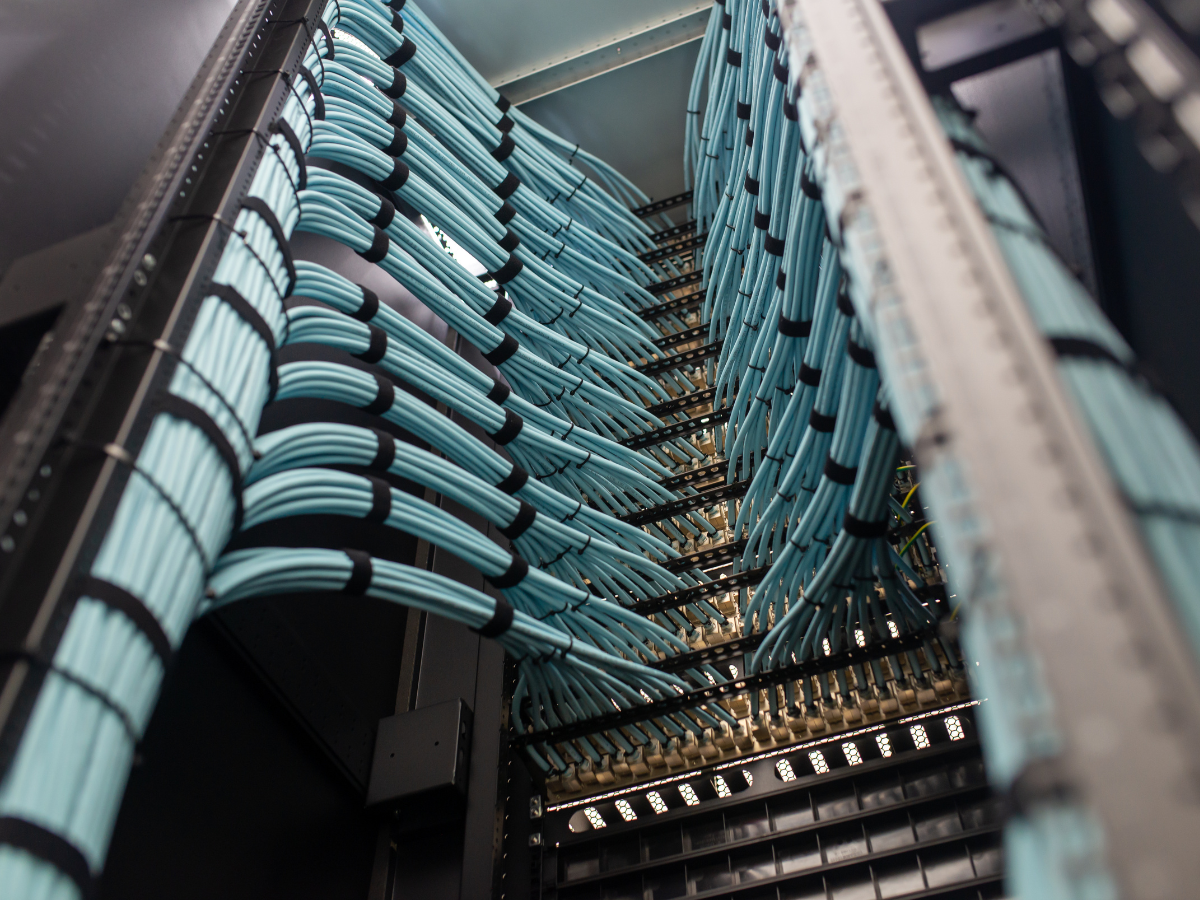
The corporate software landscape is increasingly resembling a sprawling, Prévert-style inventory: disjointed and costly. During the 2010s, the trend was fragmentation. Each department—marketing, HR, and beyond—went “shopping” on its own, selecting the editor that was hottest at the moment to address an immediate need. This departmental autonomy, while enabling local agility, ultimately generated a tech beast that Thomas Ciezar, the Marketing Director of Zoho France, calls a “spaghetti of services,” a nod to the SaaS model (Software as a Service).
The End of the Shadow IT Era and the Return of Control
For a long time, the market pushed toward specialized, siloed solutions. The decision-making power over digital tooling had shifted from IT departments to end users. This decentralization produced a multitude of tools that were often poorly, if not entirely, disconnected from one another.
Today, the tide is turning and a thorough cleansing is underway. A structural shift is taking place: “For about a year now, I’ve seen the IT department reclaim some of its status and start taking back control of these tooling projects,” observes Thomas Ciezar. This movement isn’t a mere coincidence or an internal power grab; it is a technical and operational necessity that has become critical to the economic survival of organizations. Companies face an urgent challenge: rationalization and orchestration are essential for staying competitive.
AI, the Arbiter of Data Quality
If the IT function is reclaiming centrality, it is largely thanks to the rise of artificial intelligence. For AI to be effective, it cannot tolerate disorder. It requires clean, high-quality, and especially centralized data. This technological shift acts as a reveal: you cannot build a high-performing AI model on fragmented foundations. “The AI models that work best rest on solid, homogeneous foundations with coherent data,” notes Thomas Ciezar. AI thus offers an opportunity to rethink everything. It imposes a coherence that makes the accumulation of disparate tools obsolete in favor of a unified view of the organization’s information heritage.
The Ecosystem Over Silos: The CRM Case
The answer to this complexity lies in converging toward platforms capable of enabling dialogue across all company functions. The CRM tool, as an example, is particularly illustrative. Such a tool can no longer exist in a vacuum. It must operate at the heart of an ecosystem where every department both draws from and adds value. In a streamlined company, access to the CRM becomes universal:
- Marketing to drive campaigns with pinpoint accuracy.
- Customer Support to consult the complete order history.
- Legal to validate contracts upstream.
- Executive Leadership to obtain a real-time view of the company’s health.
To reach this level of fluidity, it is essential to rely on flexible tools that are inherently interconnected.
A Lever for Economic Performance
Shifting from a patchwork of disparate tools to an integrated suite—such as Zoho’s, which boasts more than 60 applications—offers immediate benefits for decision-makers. Beyond the cost reductions achievable through more competitive offerings, the employee experience is transformed.
Today, many teams exhaust themselves with repetitive tasks that move information from one software to another. By unifying the “digital toolbox,” these frictions become invisible. The company gains speed, better control of its data, and a 360-degree view of its operations.
The message from industry players is clear: the objective is no longer to have “more” tools, but to have the “best” tools, perfectly orchestrated. This shift toward integrated platforms marks the end of an era of dispersion and the dawn of a digital maturity era, in which clean, fluid data can fully serve the ambitions of the business.
