
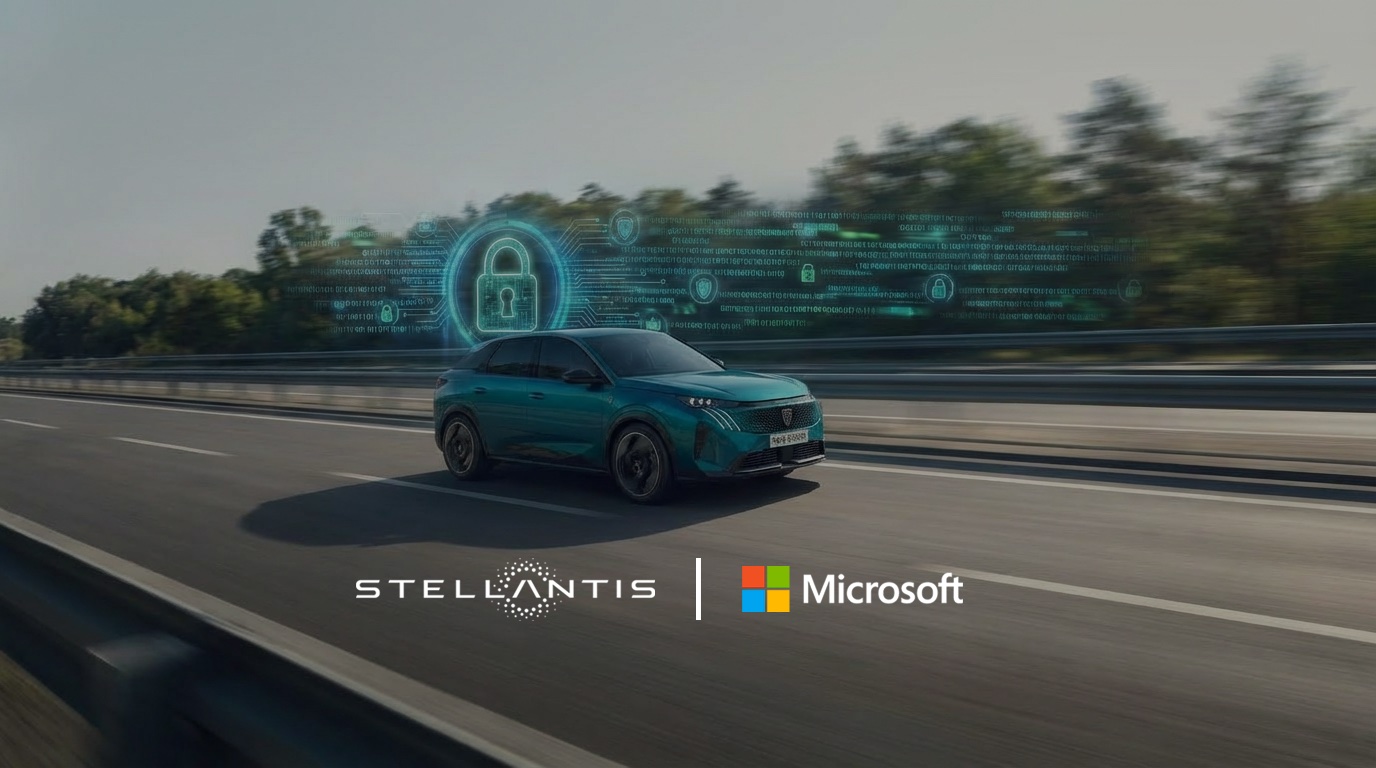
Stellantis and Microsoft announce a five-year agreement to develop capabilities in artificial intelligence, cybersecurity, and software engineering.
The two companies say they will co-develop more than 100 AI projects across three domains: customer service, product development, and operations. Among the applications cited are predictive maintenance, AI-assisted validation testing, and the deployment of digital features across vehicles.
For example, Peugeot drivers would receive recommendations on their urban driving style and alerts about the condition of their vehicle. Jeep drivers would, in turn, benefit from secure access to onboard data, including in areas with limited connectivity.
For Stellantis, the interest is twofold: to speed up AI capabilities and to strengthen its competitiveness in an industry where software is becoming a major differentiator.
Cybersecurity and Cloud Infrastructure
The cybersecurity aspect also plays a central role. Stellantis plans to reinforce its global cyber defense center through AI-powered analytics to better prevent threats targeting vehicles, customers, and the group’s activities. This direction aligns with a context in which automakers are looking to secure increasingly connected vehicles and software-dependent operations.
The agreement calls for a deeper migration to Microsoft Azure, with a quantified objective to reduce Stellantis’ data center footprint by 60% by 2029.
Internal Tools
All Stellantis employees will be granted access to Copilot Chat. An initial rollout of 20,000 Microsoft 365 Copilot licenses is planned for certain roles, accompanied by an internal training program.
Stellantis had previously collaborated with Microsoft on connected-vehicle platforms and onboard services. This contract expands the offering across the automaker’s entire value chain, from engineering to logistics.
