
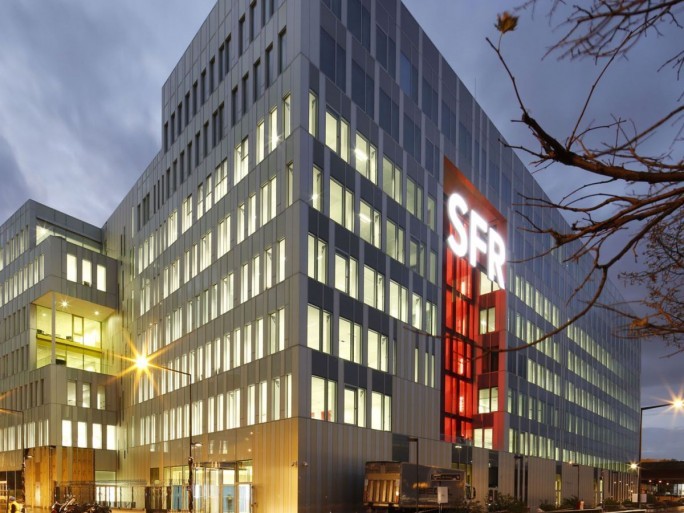
It took until well past midnight and 48 hours longer than expected. But on Saturday, June 7, the “deal of the century” in French telecoms was finally signed.
Bouygues Telecom, Free-Groupe Iliad, and Orange have reached a protocol agreement with Altice France to acquire SFR for €20.35 billion.
The final hours were particularly tense. On the evening of Friday, June 6, the trio of buyers issued a laconic press release stating they would give themselves “48 hours to finalise the agreements.”
Behind the scenes, the mood was more frank. “We almost sent out a press release saying we were halting the negotiations and calling off the deal,” admits a consortium executive to Le Figaro. The signing, originally planned for May 15, had already been postponed once to June 5.
The complexity of the legal transaction partly explains these delays.
“We’re talking about 4,000 pages of legal documentation that four or five law firms were working on full-time,” explains a source close to the case to the newspaper.
The negotiators have been wrangling especially over price adjustment clauses. Patrick Drahi could thus hope to reclaim up to €650 million more depending on SFR’s health at closing. Conversely, the consortium has mechanisms to lower the price if the operator’s performance deteriorates.
Termination indemnities of up to €2 billion are included in the protocol, depending on the grounds and the date of any exit.
Who gets what
The breakdown of SFR is unprecedented in Europe.
Bouygues Telecom, which finances 42% of the operation, gains the entire SFR Business (€1.2 billion in revenues), 5.9 million retail customers, the virtual operator Prixtel, and the mobile network in non-dense areas. Its share accounts for 52% of the total revenue of the perimeter being ceded.
Free (31% of the financing) takes the RED by SFR customer base, i.e., 6 million low-cost subscribers, plus 2 million additional customers including SMEs under the SFR brand.
Orange, the smallest contributor among the three at 27% or €5.6 billion, takes 4.9 million retail customers and the virtual operators Réglo, Syma, and Coriolis. It also seizes 47 MHz of additional spectrum, making it the operator with the largest range of frequencies in France, totaling 221 MHz.
During a transitional period of at least 30 months, SFR will continue to exist within a jointly owned holding company, equally held by the three operators. This structure is intended to facilitate customer migrations and dispute management. “For competition reasons, there will be no commercial activity,” states a consortium executive.
The real obstacle: Brussels or Paris
Signing the protocol is only a step. The operation still must obtain clearance from competition authorities in Paris or Brussels; the parties have secured that the dossier will be examined by a single jurisdiction.
The European Commission has not made it easier in recent years for mergers between operators on the same market. France’s finance ministry, Bercy, is also keeping a close watch. On Sunday, Minister Roland Lescure warned on RTL that the government would be vigilant about “the lasting preservation of employment” and “the impact on subscription prices for consumers.”
On the employment front, the consortium commits to guaranteeing the jobs of all 8,000 employees taken on until early 2029. “CFE-CGC Télécoms will take the Conseil d’Etat to court if ARCEP does not subordinate the reallocation of frequencies to the relocation of jobs in France or Europe, as required by the Postal and Telecommunications Code,” states the union.
The final signature is anticipated in the second half of 2026. The actual closing, however, could only take place in the second half of 2027.
Fourteen years after the arrival of Free Mobile, France’s telecoms market could thus move from four players to three, provided regulators allow it.
