
The Convergence of Physical Security and Cybersecurity
Cybersecurity policies frequently center on managing firewalls and encrypting data flows. Yet hardware flaws remain a critical vector for compromising IT infrastructure.
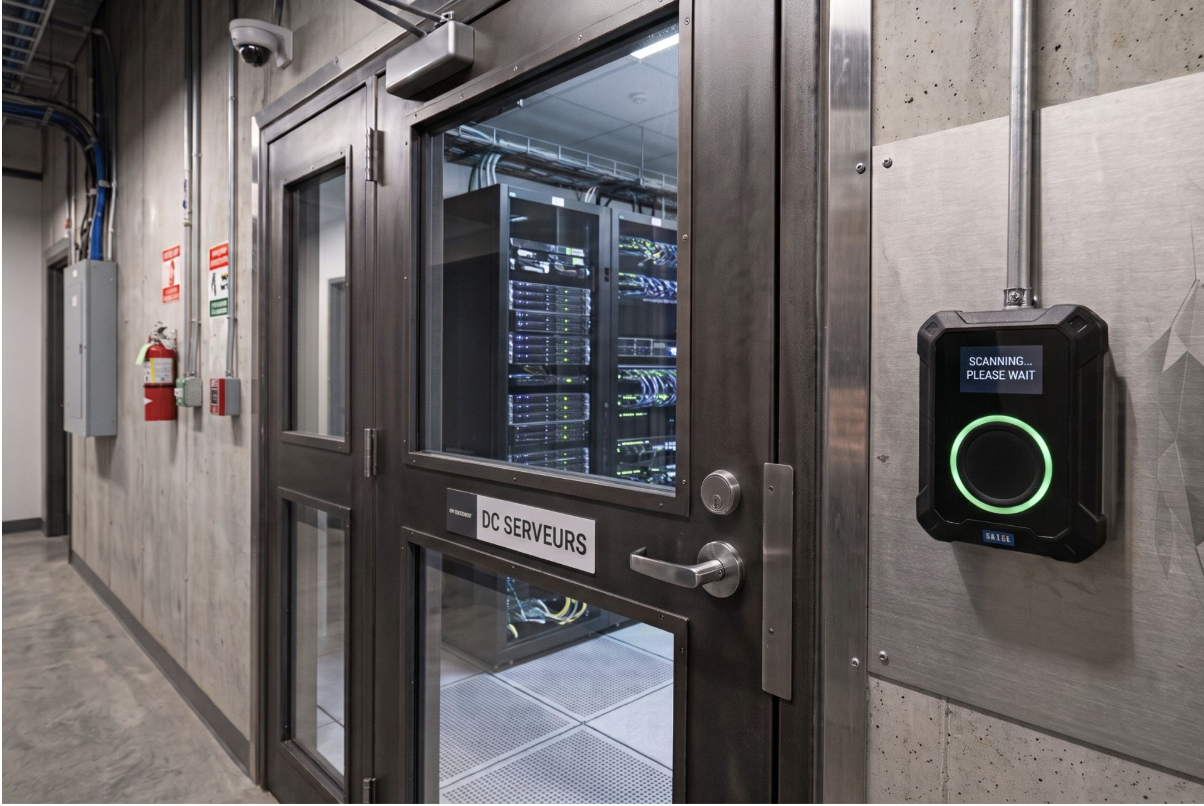
A physical intrusion into a data center or a distribution room enables attackers to bypass even the most sophisticated software protections. Implementing a rigorous access-control system locks this vulnerability at the source.
Providing every staff member with a secure corporate badge zones off sensitive areas with hermetic precision. IT teams configure granular access rights from the network administration interface.
This technical zoning ensures that only accredited engineers and technicians interact physically with server racks and switches.
The Technologies Behind Employee Identification
Traditional magnetic tracks show known vulnerabilities and give way to devices that embed microprocessors.
The use of RFID badges relies on encrypted radio transmission protocols between the chip and the reader. This layer of cryptography blocks cloning attempts and durably secures employee identification within the buildings.
Information-system leaders now synchronize these hardware tokens with the organization’s directory. Authorizations update automatically when a user’s network privileges change.
Market players such as SBE Direct provide tracing equipment designed to integrate natively with existing monitoring environments. Access revocation can be executed in seconds from the central console in case the badge is lost.
Deploying an Enterprise Badge that Meets IT Requirements
Adopting identification hardware requires defining a rigorous provisioning protocol. IT security managers precisely map the building’s risk zones. Each badge presentation at a reader generates a log line, feeding directly into the global monitoring tools.
An IT physical-security architecture coherently brings together hardware and software elements:
- Intelligent door controllers that operate autonomously in the event of a network outage.
- A supervisory software centralizing the management of security events.
- In-house encoding stations to generate the physical identifiers internally.
- Cards embedding cryptographic chips resistant to physical tampering.
The cross-referencing of physical access logs with logical login records immediately reveals suspicious behavior. A user connected to the network from their workstation while their badge had left the building triggers an alert at the operational-control center. In this way, the protection of IT hardware aligns with the broader cyber-defense strategy.
