
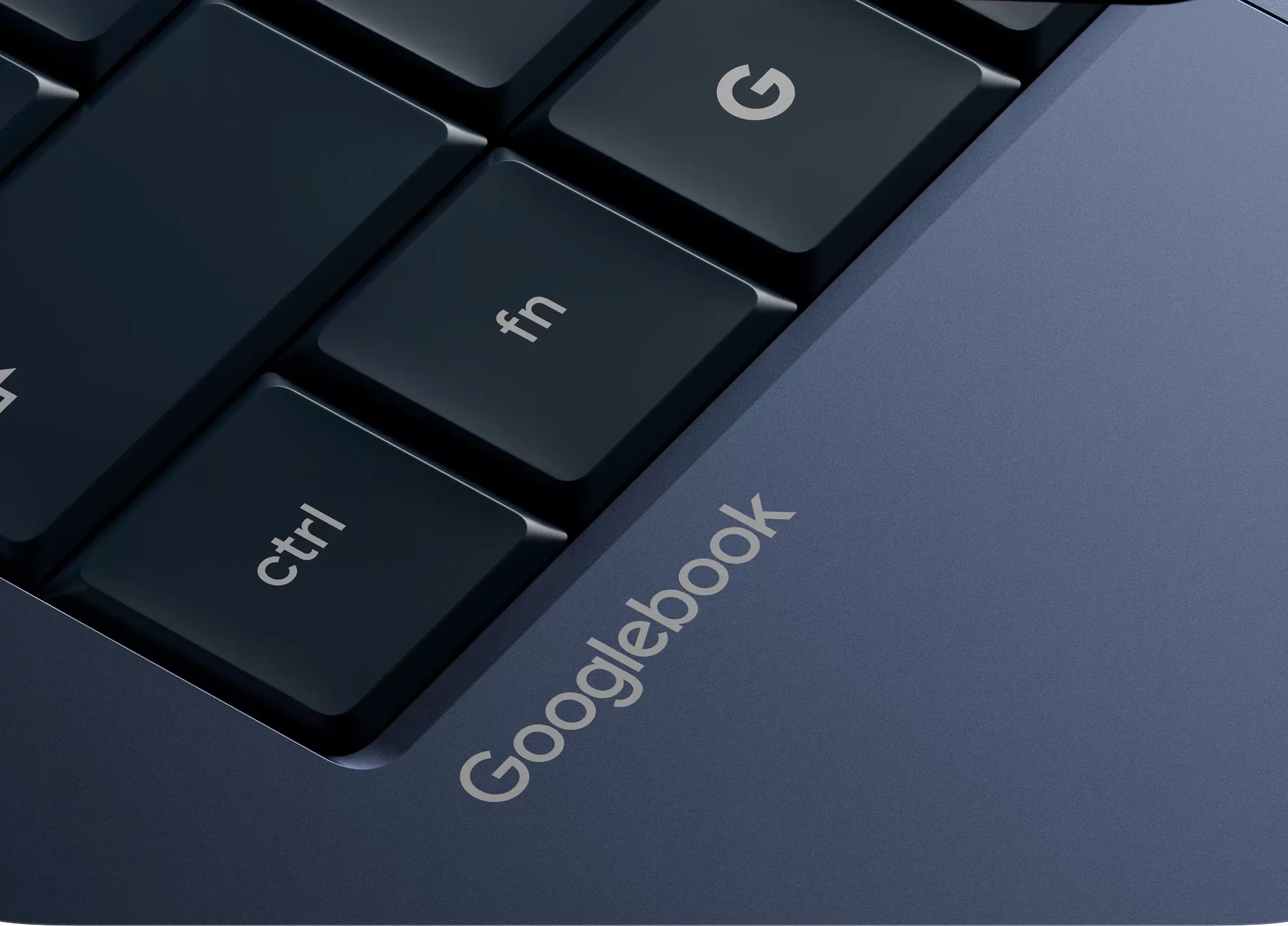
Trying on clothes virtually, planning a leisure trip, finishing a Duolingo lesson… For now, with GoogleBooks, we’re not talking about professional uses.
Google plans to bring these laptops to market starting in the autumn of 2026. It lists five manufacturers: Acer, ASUS, Dell, HP and Lenovo (and three chip suppliers: Intel, Qualcomm, and MediaTek). No mention of Samsung, which is said to be pursuing its own Android laptops with the OneUI interface.
The GoogleBooks will also run Android as a base, but with elements of ChromeOS. A blend that is currently known under the name Alumin(i)umOS.
Google highlights the native execution of Android apps (no emulation as with Chromebooks). By contrast, it stays mum about Linux applications. Nor, more broadly, about apps optimized for a desktop environment, except for Chrome.
The American group says a lot more about Gemini. It even makes it the showcase for GoogleBooks, underscoring their premium positioning (“our most advanced laptops”).
“Create My Widget,” “Magic Pointer”… From Chromebook Plus to the GoogleBook, AI continuity
The main AI features emphasized: “Magic Pointer.” In broad terms, shaking the mouse pointer opens Gemini, which can then perform actions on on-screen elements. Google offers two examples: creating a meeting from a date in an email and merging images of a living room and a sofa. The presentation video of GoogleBooks provides a third example: virtual try-on, using photos of the person and items of clothing and accessories.
Behind this technology lies a research project from DeepMind. The demos emphasize voice control and on-the-fly code generation to carry out actions between applications. Among the examples given:
- Select two ingredients on a web page and add them to a shopping list
- Display the route between two locations shown in separate windows
- Inspire from one image to generate another from a restaurant menu
We will likely have to wait until spring 2027 for the “Create My Widget” feature to arrive on GoogleBooks. Google gives the example of a dashboard to plan travel, lodging and meals for a family gathering for a meeting.
“Create My Widget” will first arrive on phones. Beginning this summer, with the latest Pixel and Galaxy devices. It is part of the Gemini Intelligence family. Google has just announced this brand intended to group AI capabilities for premium devices. Rambler, which uses Gemini for voice dictation, is also part of it.
As of now, Google does not talk about local AI. It is understood that the “Magic Pointer” feature requires an Internet connection.
ChromeOS slowly blending into an Android-based foundation
On the hardware side, the GoogleBooks will share an interactive light bar at the back of the chassis. The latest Android 17 beta contains hints about a Pixel Glow system that would utilize it. It would also be rolled out on smartphones, with the Pixel 11 leading the lineup.
The Chromebook Pixel and the Pixel C tablet, launched in 2013 and 2015 respectively, were equipped with such a bar. It was used notably to check battery level, in addition to receiving various alerts.
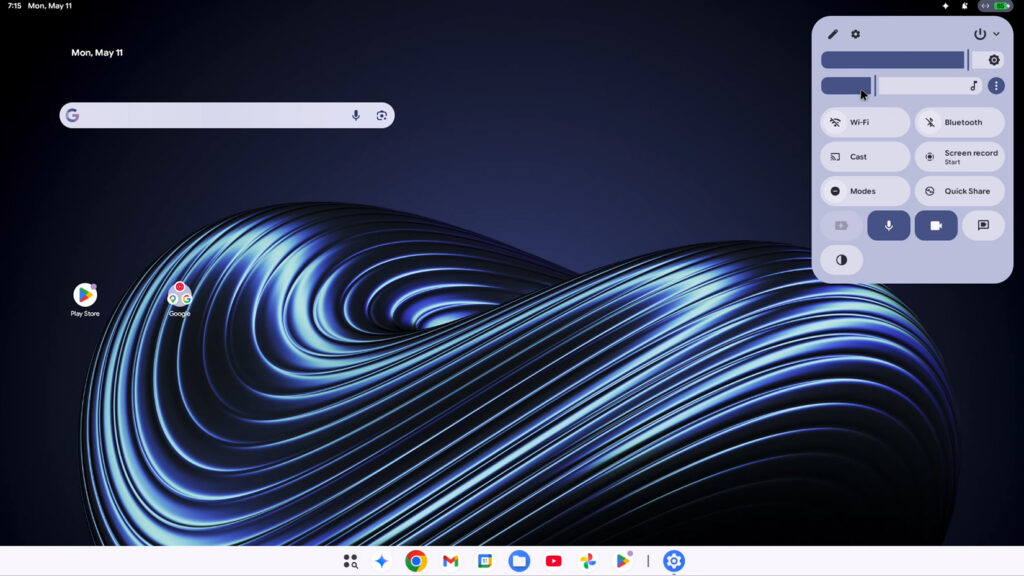
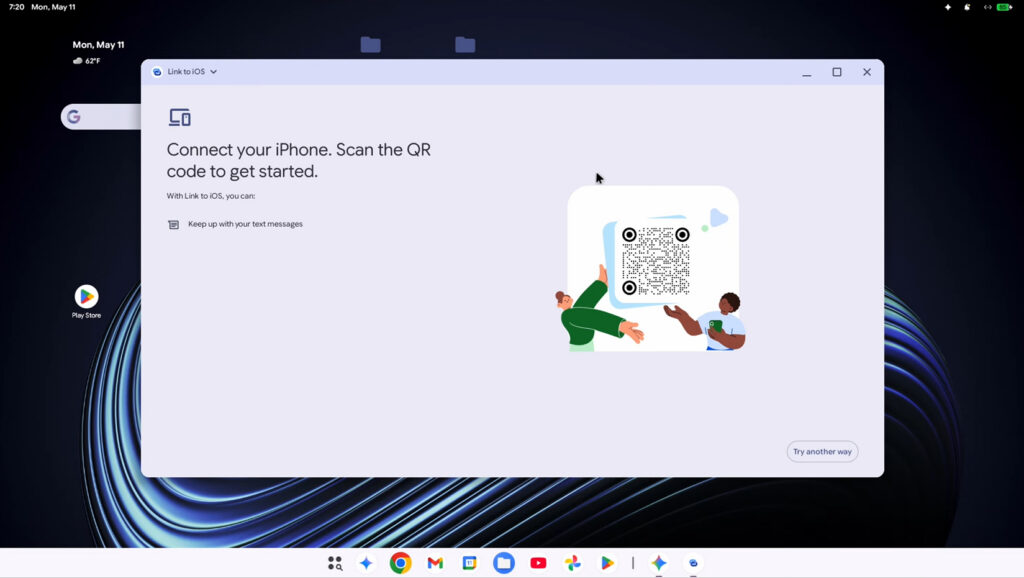
The Telegram account MysticLeaks, reliable on certain leaks it has shared so far, posted a roughly fifteen-minute video giving a general idea of the potential look of Alumin(i)umOS. The system—virtualized on a MacBook Pro—runs on Android 17. From ChromeOS, one finds, among other things, the app drawer, the taskbar and the file manager. Google added the ability to create shortcuts and folders on the desktop. As well as to “cast” apps from a phone (Duolingo is given as an example).
Chromebook sales could continue beyond 2026, Google hints. They could thus coexist with GoogleBooks in the catalog. One thing seems settled: support will extend until its end. Some devices may switch to Alumin(i)umOS, but which ones and under what conditions remains unknown.
