
Local AI: A Response to Cloud Limitations
Generative AI tools have flooded desktops. Yet in most organizations, these processes still run on distant servers, bringing with them latency, dependence on network access, and data sovereignty concerns. Copilot+PC reshapes this equation.
The AI runs directly on the machine, locally, without calling upon cloud services or exposing enterprise data to the outside world.
Practical use cases are beginning to emerge. The Recall feature, which instantly retrieves content from a user’s work history, or automatic optimizations during video conferences (image enhancement, cropping, noise removal with Windows Studio Effects) illustrate what this local approach makes possible in daily life.
For IT teams, the benefit is twofold: faster application responsiveness and greater control over sensitive data.
NPU from AMD : the component that changes everything
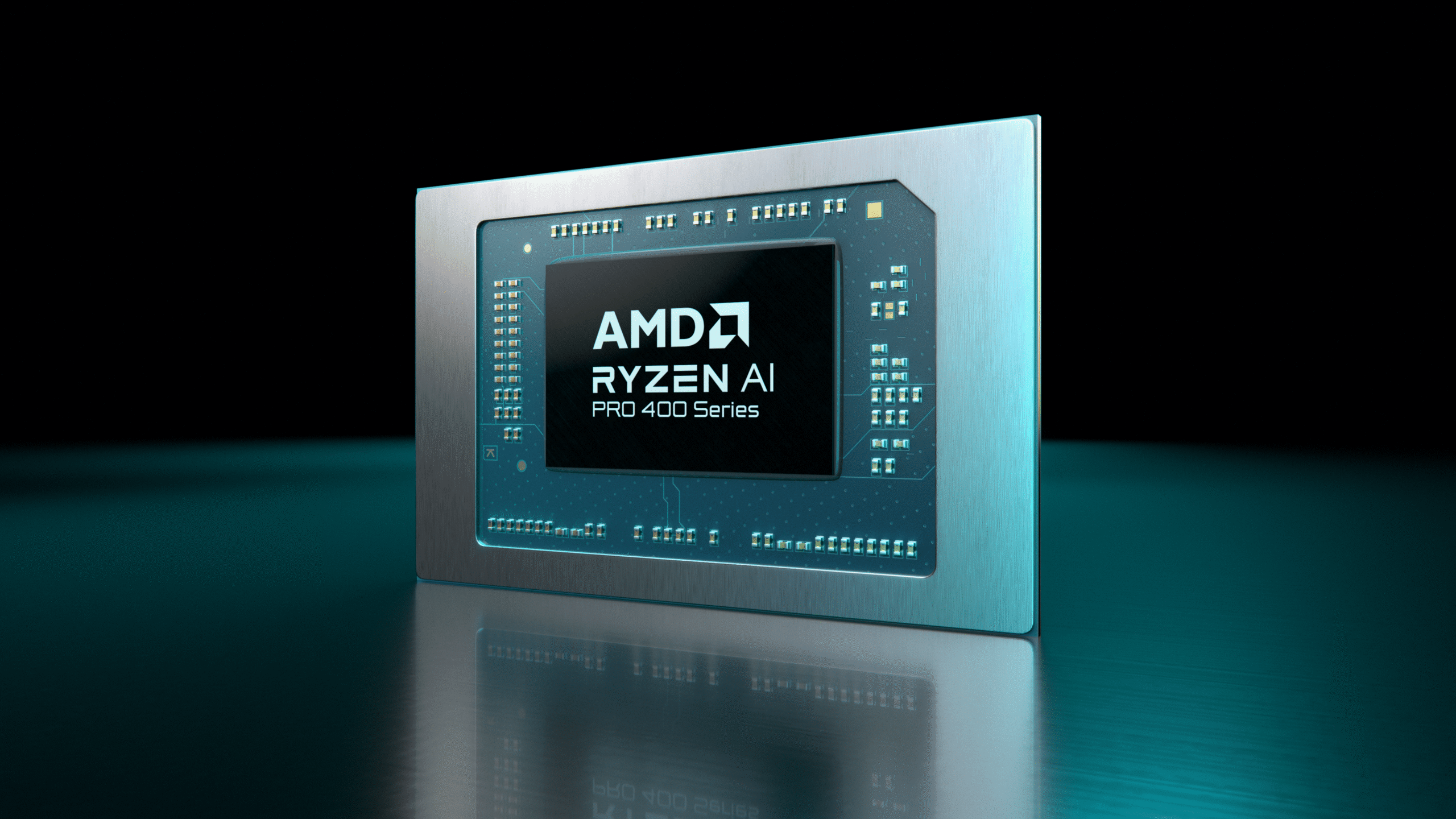
For this promise to hold up in real-world conditions, the underlying hardware matters. AMD has integrated into its Ryzen™ AI processors an NPU (Neural Processing Unit) capable of up to 55 TOPS, dedicated solely to AI processing.
The logic is straightforward: delegate AI inferences to this specialized engine so as not to intrude on the CPU and GPU, which remain available for business applications.
“AI should not drain workstation resources in spurts, to the detriment of business applications. The NPU must be able to run continuously, stably, and sustainably, and must not overload the system or impact user productivity,” sums up Abdallah Lessilaa.
Results: the overall performance of the workstation is preserved and energy consumption is optimized. This is far from a trivial consideration in corporate fleets, and AI naturally fits into daily use without ever slowing down the machines.
From testing to decision: the AMD Demo Pool as an accelerator
That question—will it work in my environment?—is the one every IT leader eventually asks.
AMD answers with a concrete setup: the Demo Pool, deployed in partnership with inmac wstore. Companies can test the machines for up to six weeks in real-world conditions, before any purchase decision.
Evaluations focus on what truly matters: the smoothness of everyday AI usage, measurable productivity impact, energy performance under real load, and compatibility with the existing IT infrastructure. “This phase of experimentation is essential to turn technological innovation into a strategic decision,” emphasizes Abdallah Lessilaa.
In a context where asset renewal cycles are lengthening and every investment must be justified, the real question isn’t whether embedded AI will assert itself, but how much it will cost in the long run not to have evaluated it promptly.
