
Revolut has made self-hosted models the default solution for AI-assisted development, while not sacrificing commercial services.
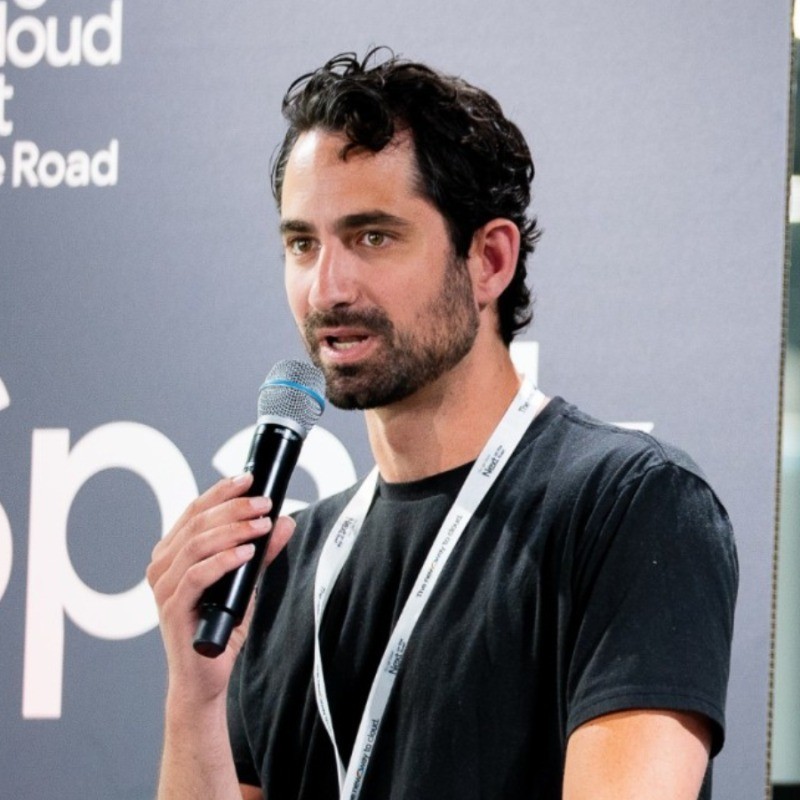
At the AI Engineer NYC conference, David Abitbol, head of AI operations, outlined this strategy and the optimizations needed to bring it into production.
According to him, Revolut serves GLM-5.3 to roughly 2,000 engineers on 56 Nvidia B200 GPUs, with an aggregate average cost close to $0.30 per million tokens. He notes that the bill represents about one-tenth of the spending previously incurred with Anthropic and OpenAI.
That ratio, however, does not constitute a universal self-hosting price nor a comparison based on an identical workload. The presentation provides no breakdown that would allow precise identification of which infrastructure and operating costs are included in the calculation, nor to verify the total cost of ownership.
Claude Code and Codex remain accessible for exceptions.
Productivity: An Unproven Causality
Productivity results concern an earlier stage. The move to GLM-5.1 in spring 2026 coincided with announced improvements of about 60% in coding time and 70% in lead time. The latter measures the interval between taking on a feature and its merge into the code, ready for deployment but not necessarily deployed yet.
Internal comparisons do not isolate the effect of the model change. David Abitbol argues in particular that looser token-budget constraints encourage using AI for peripheral tasks, such as searching for information in emails, Jira, or Confluence.
These figures therefore do not constitute a controlled benchmark of GLM-5.3 against Claude or Codex.
Optimizing Before Adding GPUs
The feedback concerns both the inference service and the model. With a fixed number of GPUs, Revolut reports a 76% increase in queries per second and an 88% reduction in the time to first token, dropping from 14.26 seconds to 1.68 seconds. The operational goal is to stay under three seconds.
The levers cited include FP4 quantization on Blackwell GPUs, tensor parallelism, and cache reuse. David Abitbol also suggests examining speculative decoding and the separation between processing the input context and generating tokens, without asserting that each technique is actually deployed at Revolut.
Regarding the context, he estimates that about 256,000 tokens meet the described needs, rather than routinely reserving the maximum capacity of one million. The aim is to preserve memory available to handle multiple requests simultaneously.
A Multimodal and Supervised System
Since GLM-5.3 is a text model, the head of AI operations recommends routing requests that require image understanding to another model. APIs compatible with those of OpenAI also enable connecting hosted models to the development tools used by engineers.
On security, Revolut highlights isolated environments, approval rules for restricted operations, and telemetry to investigate incidents. David Abitbol also distinguishes between hosting the model weights on infrastructure chosen by the company and relying on the model developer’s remote service.
