
Last month, Nvidia hit a peak market capitalization of $5.8 trillion. Today, the stock has fallen by roughly 30%, and the man who built this powerhouse has just stepped away from his post.
Officially, Jensen Huang, 63, CEO and top shareholder with around 3.6% of the equity, is resigning from the company he founded thirty-three years earlier, in 1993. The thanks are curt, as is customary in such a situation. He is not the first American tech chief, or business leader in other sectors, to leave office after revelations of extramarital affairs. His case is particular, shaded by a halo of suspicion of industrial espionage. We will return to that.
Driven by interplanetary success, the public has come to know Nvidia’s story—this specialist in graphics chips that, with its processors, has become the backbone of AI development.
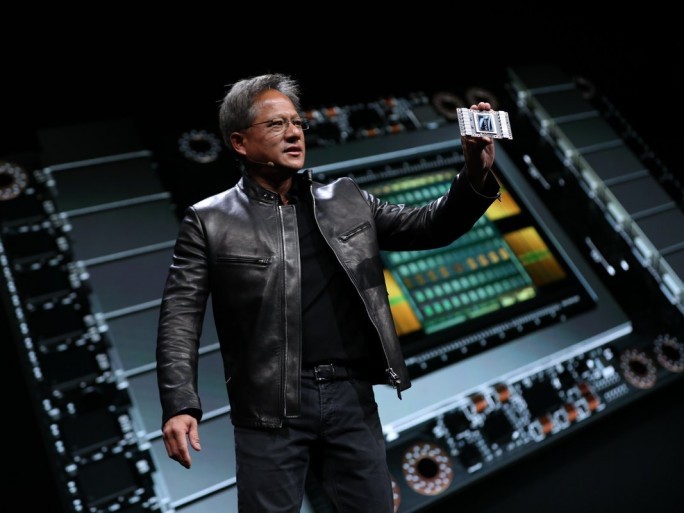
Perfectly marketed as the tech boss, with his leather jacket, jeans, and sneakers, Jensen Huang has been Nvidia’s global ambassador. In Taiwan, his homeland, he is welcomed as a star. In Washington as in Beijing, officials open doors to him, and Donald Trump has elevated him to a near-permanent guest at the White House.
The China Snag
His stance on China has earned him adversaries. Huang argues that restricting the sale of the most advanced AI chips to Chinese firms harms the U.S. industry. In December 2025, Donald Trump grants him satisfaction by authorizing the sale of the H200 to China, in exchange for a commission to the U.S. state.
Meanwhile, several Nvidia customers in Southeast Asia are suspected of routing some chips to China. Among them is Megaspeed, a Singaporean company reportedly financed, according to the Financial Times, by the Chinese Alibaba, and targeted by a Commerce Department investigation since late 2024.
That is where the matter becomes personal. As early as October 2025, the New York Times questions the ties between Jensen Huang and Alice Huang, an executive at Megaspeed whom U.S. intelligence agencies suspect of working for Beijing.
According to the Washington Post, which cites a briefing attendee, Marco Rubio warned Donald Trump in May 2026, aboard Air Force One en route to China, that Nvidia’s chief might be having an affair with a woman allegedly involved in espionage. Huang reportedly joined the plane during a stopover in Anchorage.
Fifteen Days of Free Fall
The matter comes into the open on October 29, when the New York Times details the suspicions of the U.S. security services.
On November 8, Huang acknowledges in a letter to his employees that he deceived his wife and offers his apologies. Nvidia launches an inquiry, and the board lends its support.
The following day, Trump declares he was unaware of the situation when he invited Huang to China and says he believes his ally, who allegedly assured him he did not know who Alice Huang truly was. That version is hard to reconcile with the Washington Post’s account of the Rubio briefing. Beijing, for its part, denounces the accusations as groundless attempts to smear China.
On November 11, fresh upheaval: The New York Times reports a relationship with a woman placed under his authority. According to a person familiar with the matter quoted by the Wall Street Journal, it would be Kimberly Powell, who runs the group’s health unit. Nvidia and Jensen Huang do not confirm anything.
Thursday, November 12, according to the Financial Times, Huang convenes his teams to prepare his annual Washington keynote and promises “the best of them all,” as if nothing were amiss. A colleague described a surreal scene. Privately, he is said to have hinted to coworkers that his personal life might now count for more than his job.
The Nvidia board meets in emergency session in Santa Clara. Jensen Huang resigns. He is officially thanked for “his invaluable contribution.”
Jensen Huang, a CEO with No Heir Apparent
But who will succeed him?
The road ahead is daunting. Huang had said he did not believe in successor planning, and Nvidia acknowledged in its shareholder materials that its strategy rested heavily on long-serving leaders.
The CEO reportedly had between 36 and 60 direct reports, depending on the source. This flat organizational structure, much in vogue in tech, makes him a gravity center difficult to replace.
To manage the interim, Collette Kress, chief financial officer for thirteen years, assumes the role of interim CEO. Harvey C. Jones, a director since the company’s founding in 1993, is named chairman of the board.
Will employees be told who their new leader will be when they attend the general meeting scheduled for November 18? The board is exploring both internal and external candidates for Jensen Huang’s successor.
