
The European Commission and the national competent authorities now have a scientific committee to assist them in implementing the AI Act.
Of its 60 members appointed for a renewable two-year term, three represent France: Céline Castets-Renard, Raja Chatila and Tom David.
Céline Castets-Renard
Alongside her appointment to the scientific committee*, Céline Castets-Renard is embarking on a new chapter at the Faculty of Law, Economics and Finance at the University of Luxembourg. She had previously spent seven years at the University of Ottawa (Canada) as a tenured professor in the Civil Law Section of the Faculty of Law.
She remains the holder of the Canada Research Chair in International and Comparative AI Law. She also holds the chair known as “AI Laws and Governance in a Global Economy,” in partnership with Airbus, within ANITI (Artificial and Natural Intelligence Toulouse Institute, labeled a 3IA institute as part of the first phase of the national strategy for artificial intelligence).
Céline Castets-Renard held, from 2020 to 2024, another ANITI chair: “AI Law, Accountability and Social Trust in AI.” She was also an expert member to the European Commission at the Observatory on the Economy of Online Platforms (2021-2024). Later, she served as vice-president of the copyright Working Group at the AI Office (2024-2025), with a view to drafting the code of practice governing general-purpose AI models.
A former Honorary Member of the Institut de France, Céline Castets-Renard spent nearly two decades (2002-2019) as a lecturer and then professor at Toulouse 1 Capitole University. A former student of ENS Cachan (1994-1998), she holds a PhD in private law from the University of Paris-Saclay (Jean Monnet Law Faculty in Sceaux, 2001), a DEA from the University of Montpellier (1998), and a Master’s in Business Law from Paris 1 Panthéon-Sorbonne University (1996).
Raja Chatila
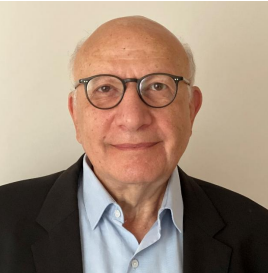
Raja Chatila is a veteran of IEEE. He served there, between 2014 and 2015, as president of the Robotics and Automation Society. He currently chairs the Global Program on the Ethics of Autonomous and Intelligent Systems (launched in 2016).
He also chairs, among other things, the Data and Digital Use Ethics in Education Committee (an arm of the Ministry of National Education). Since 2011 he has been an Emeritus Professor at Sorbonne University, where from 2014 to 2018 he led the ISIR (Institute of Intelligent Systems and Robotics).
Before Sorbonne University, there was the CNRS. Notably as director of LAAS (Laboratoire d’analyse et d’architecture des systèmes de Toulouse, 2007-2010). He then served as deputy scientific director at INS2I (Institute for Information Science and Interactions) in charge of automation and robotics.
More recently (2020-2023), Raja Chatila co-chaired the Working Group on Responsible AI within the Global Partnership on Artificial Intelligence.
Tom David

Tom David co-founded PRISM Eval, a startup focused on evaluating the safety of AI. He is currently CEO of the GPAI AI Policy Lab. This research organization based at the Cyber Campus specializes in the security and international coordination challenges posed by general-purpose AI models.
Holding a bachelor’s degree in sociology from Jean Monnet University in Saint-Étienne (2020) and a master’s in social sciences from ENS Lyon (2022), Tom David spent roughly one year (2023-2024) as an IA project lead at the think tank Institut Montaigne. He subsequently worked on AI metrology for HumaneIntelligence (a US nonprofit). In parallel, he was a member of the expert group formed to draft the code of practice governing general-purpose AI models, as well as a working group on AI reliability within the European Committee for Standardization in Electronics and Electrotechnology.
* The scientific committee will address, among other topics, systemic risks, model classification, evaluation methodologies, and market surveillance. It is complemented by an advisory forum that will provide expertise on standardization and implementation.
