
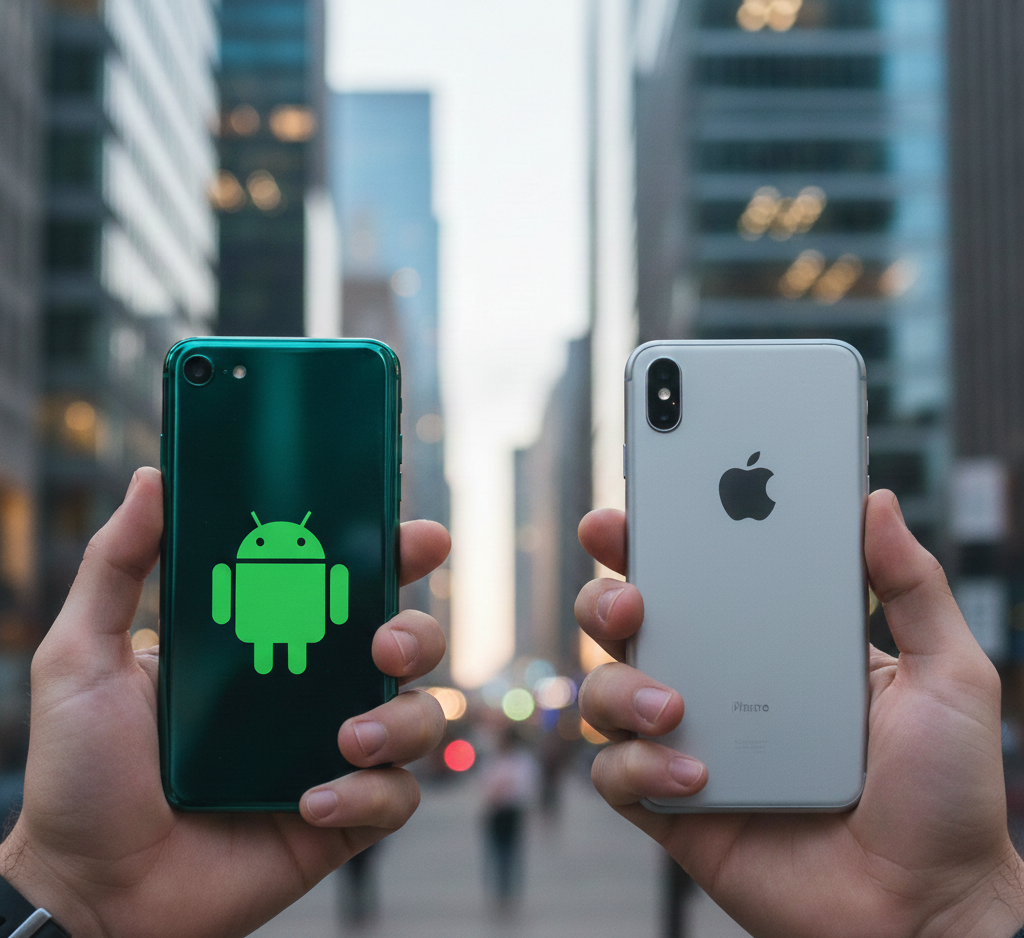
AirDrop and Quick Share are now interoperable.
Apple isn’t making a big splash about it. Unlike Google, the support is currently limited to the Pixel 10 lineup and the “Everyone” mode (it isn’t possible to restrict transfers to contacts only).
Toward the end of a proprietary protocol
If Apple has kept a low profile, it’s because this interoperability was imposed on them by Europe under the DMA. The broad directive: offer third parties a Wi‑Fi P2P sharing solution that is as effective as the one implemented for Apple’s own devices and services.
On iOS and iPadOS (the Apple platforms governed by the DMA), two protocols can be used. One is open (the Wi‑Fi Aware standard), the other is proprietary (AWDL, Apple Wireless Device Link).
Apple has chosen to offer interoperability via Wi‑Fi Aware rather than open AWDL. The latter is therefore set to be phased out in the long term. In the meantime, it could still need to be interoperable whenever a functional gap exists with the Wi‑Fi Aware implementation. Likewise, the Wi‑Fi chips in iPhones and iPads will have to be capable of handling two concurrent P2P connections. A requirement that the European Commission has maintained despite Apple’s opposition. It also continues to push Apple to implement the next major version of Wi‑Fi Aware (5.0) within nine months of its publication. And to not prevent AWDL features from being integrated into that standard.
Wi-Fi Aware: what is expected of Apple
The Wi‑Fi Aware implementation must notably enable:
- To establish a connection on demand, with no more user interventions than necessary between Apple devices
- To maintain in parallel a Wi‑Fi infrastructure connection
- To access the same connection metadata and configure the same settings
The access to the same metadata must, among other things, allow storing and opening the files received in specific apps, as AirDrop does.
By “the same settings,” this particularly means the ability for the OS to trust a device under conditions equivalent to AirDrop. And to restrict device discovery to those previously designated as trusted.
The interoperability of Wi‑Fi P2P sharing also carries accessibility obligations. Among them:
- Fair treatment relative to AirDrop in the iOS share sheet
- Launching transfers without having to open a third‑party app
- Ability to leverage the system UI for file transfers
- Discovery of recipient devices even if the transfer solution isn’t installed (the user must then be alerted to incoming files and guided to the appropriate app store)
Third‑party transfer solutions must also be able to dynamically switch communication protocols, as AirDrop does between P2P, infrastructure, Bluetooth and cellular networks.
To consult in addition :
iOS facing the DMA: Apple’s 12 tasks
DMA revision: a few avenues for action
Apple calls for repeal of the DMA
