DynamoDB to manage context, S3 to centralize agent configurations, Lambda to orchestrate tools and observability… At the start, there was a bit of all of that in La Centrale’s GenAI platform.
This v1 enabled the production deployment of about twenty use cases. Among them, generating descriptions from vehicle data to make listings more attractive. Or assisting with pricing for professional sellers. However, it turned out to be ill-suited for multi-agent setups. And, to some extent, for multi-supplier scenarios. It certainly required a non-trivial implementation effort to break out of the Bedrock ecosystem and connect directly to OpenAI, for instance.
Although flexible (the application layer above the Converse API), the platform was increasingly less relevant as market frameworks matured, according to Fabien Roussel, head of architecture at Groupe La Centrale.
Agents as Tools
For v2, La Centrale shifted to AgentCore, pairing it with Strands Agents, an open-source SDK (Python, NodeJS) built in AWS.

“We can do multi-agent without us having to code the collaboration itself,” explains Fabien Roussel. He adds that Strands Agents provides native integrations with OpenAI & Cie. As well as with AgentCore (for example with the memory management block: “We’re not going to code the GET and the PUT).”
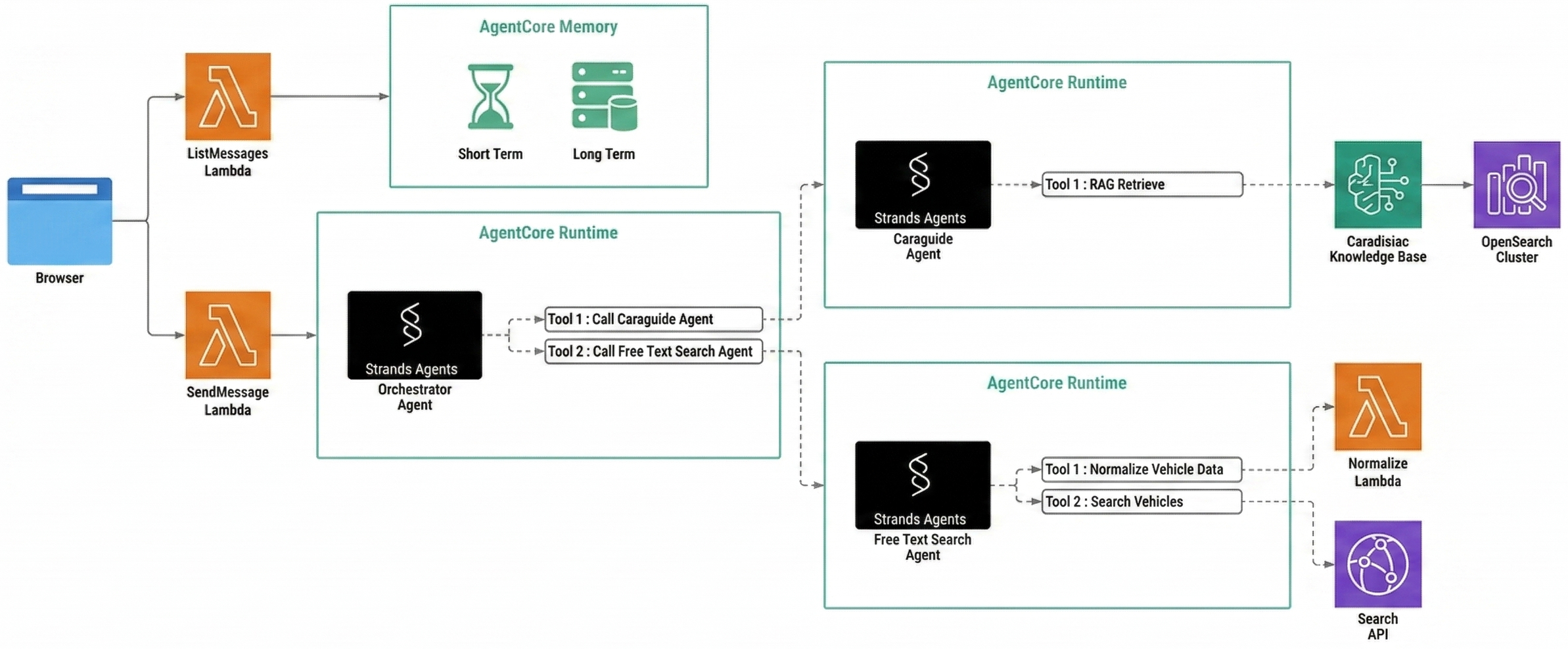
This foundation enabled improvements to the vehicle search assistant that La Centrale had deployed in 2024. Notably thanks to the agent as tool pattern: Strands Agents can encapsulate agents as tools.
On this search assistant, the main agent (the orchestrator) qualifies the user’s request, responds if it can, and delegates otherwise to specialized agents… specifically, treated as tools. On one side, Caraguide, specialized in auto advice, backed by a RAG based on Caradisiac, the group’s editorial site. On the other, Free Text Search, which normalizes vehicle data and then calls the search API.
Each agent is deployed in its runtime, with short- and long-term memory.
« About $1 » to Adapt Articles
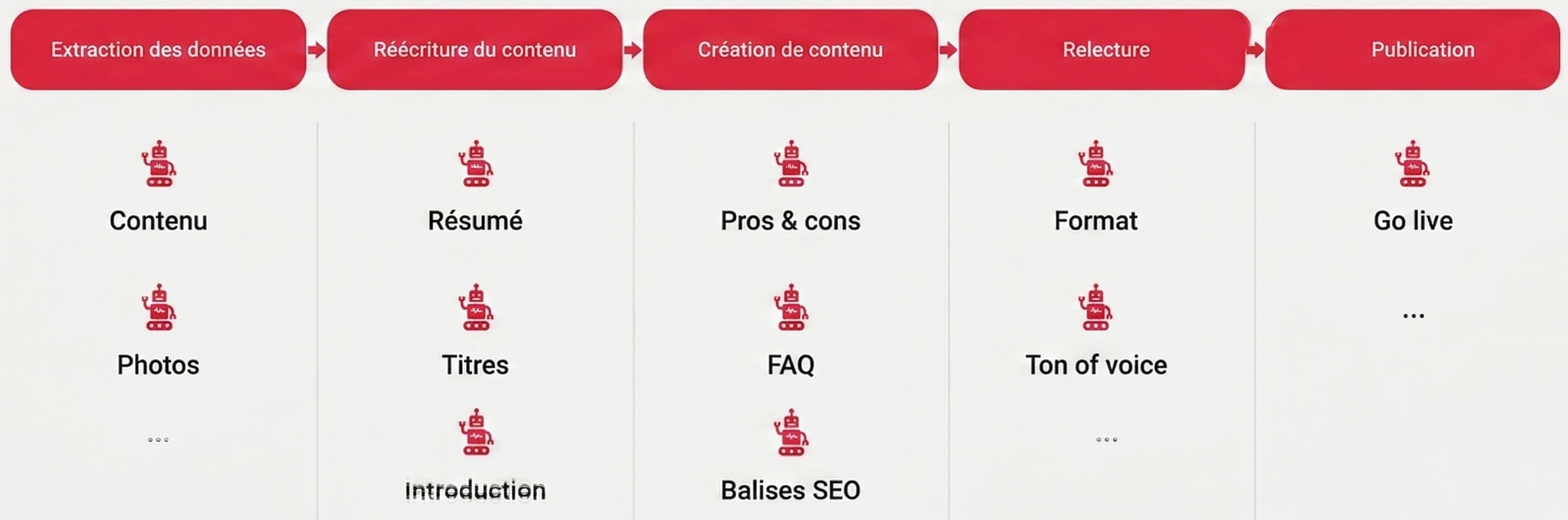
Caradisiac handles another use case: transforming its editorial content to integrate it into La Centrale. Both to aid users in the early decision-making phase and to improve search engine positioning.
The process involves about twenty agents. It takes roughly 10 minutes per article. LLM costs: about $1 (compute costs are negligible, according to Fabien Roussel).
When the agents work together, they share a runtime.
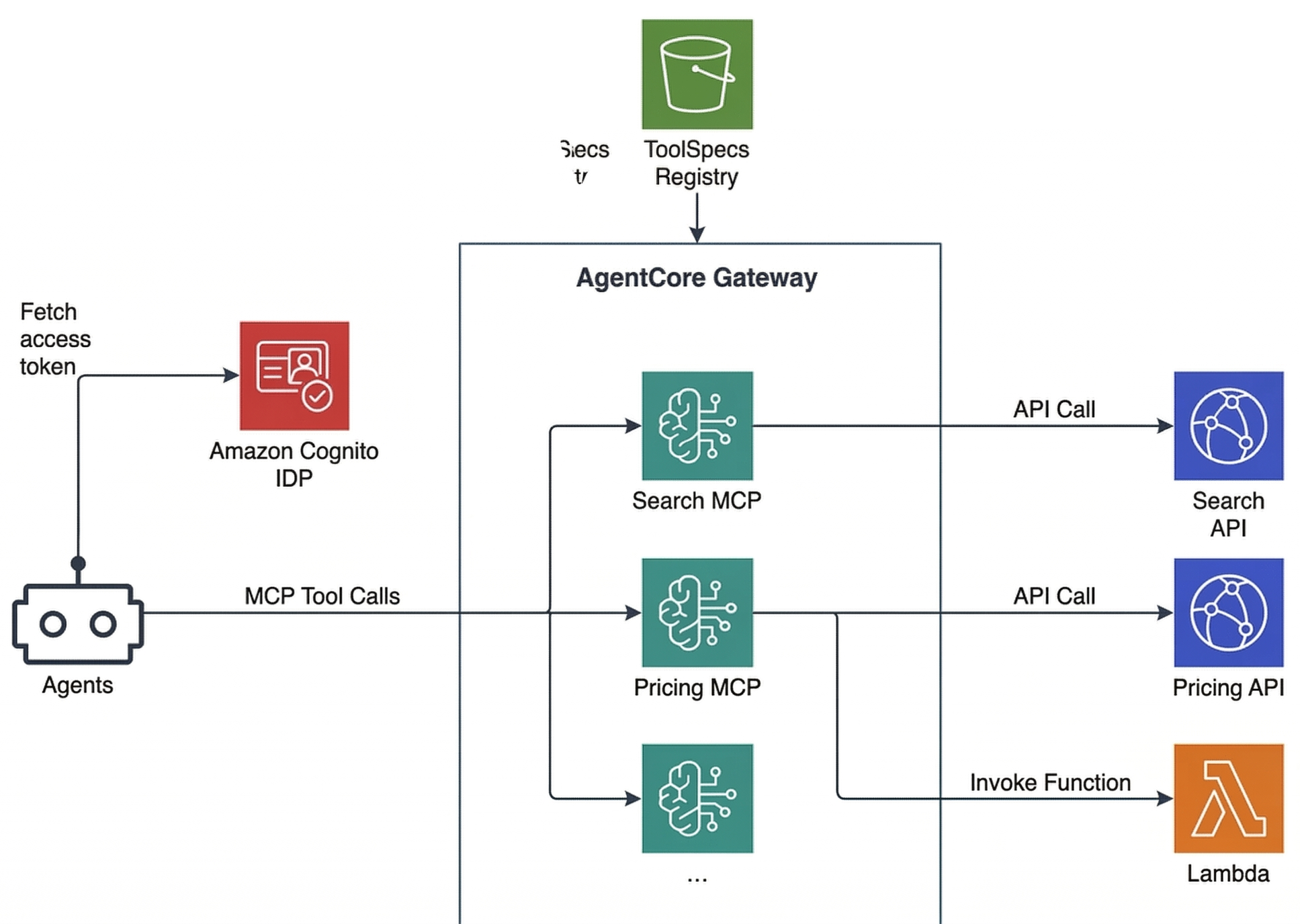
The two use cases leverage managed MCP servers deployed with AgentCore Gateway.
La Centrale opted for one MCP server per domain. A gateway for all tools wasn’t feasible (“We blow up the context”). A gateway per tool wasn’t feasible either (“It’s too fine, too small, we can’t scale”).
For the authentication of agents, it’s OAuth 2 with Cognito behind. For authentication between the gateway and the tools, it depends: API keys for the APIs, IAM for the Lambda functions.
Beyond deployments in AgentCore Runtime, the system also manages external agents.