
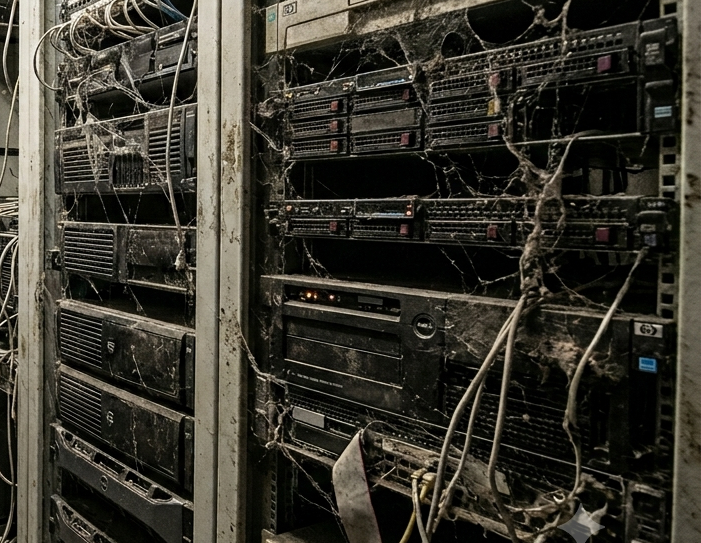
« Under tension, calling for an urgent overhaul »: this is how the Court of Auditors frames the state of certain information systems at the social security system.
For others, it does not use those terms, but the underlying finding is the same: aging, deterioration, even obsolescence.
IT systems from the 1990s with limited room for evolution
At the CNAF (Cnational Family Allowances Fund) and at the CNAV (Cnational Old-Age Insurance Fund), the frequency of reforms heavily strains the IT systems and thus delays their modernization.
The Cristal core application of the CNAF was rolled out in 1998, using a programming language that has since become obsolete. Its CNAV counterpart, named L’Outil retraite, was designed in the 1990s and brought into production in 2003. Their ability to evolve is limited. Even as reforms have diversified the benefits paid and increased interactions with other systems.
The CNAF IT system handles the monthly payment of benefits to 13.5 million beneficiaries. But the storage capacity of the databases is undersized. This leads to slowdowns or even interruptions in processing.
The limitations of Cristal, coupled with the political will to rapidly implement the reform of the financial intermediation of alimony payments from 2017, led to the development of an ad hoc IT system. The expansion of the reform’s scope, completed in 2023, requires reorganizing this IT system. And reconnecting it to the central system… at an estimated cost of €10.5 million.
The “Excel method” for housing assistance… among others
In 2021, the reform of housing assistance also posed significant difficulties. It involved calculating APL not from the tax notice of year n-2, but from data for months m-2 to m-13 within the monthly resources mechanism. This mechanism centralizes information declared via the DSN (nominative social declaration) and the withholding at source for other incomes. But once launched, it barely accounted for certain incomes it centralized or that beneficiaries had to declare themselves.
Meanwhile, fearing Cristal could not absorb the reform’s effects, the CNAF reorganized its IT structure. Entitlements were to be calculated by a new IT system that would subsequently be extended to all benefits. Payments would remain managed within Cristal.
The interface issues between the two IT systems caused delays and liquidation errors for about 18 months. The pursuit of the reform’s intended budget savings (€1.3 billion/year) led to implementing it while anomalies persisted. Coordination with the Housing Ministry was also tricky, as it lacked the required expertise, despite the use of external contractors.
For several reforms, the decision was made to bypass the difficulties by calculating benefits in Excel, outside the IT systems, with manual transfer. These procedures (27 “calculators” at CNAV, 37 at CNAF) lengthen data entry times. They incur management costs and raise the risk of error. While CNAV’s local funds monitor them “exhaustively,” this is not the case at CNAF.
Technical debt: neither CNAF nor CNAV knows the full cost of remediation
CNAV estimates €30 million as the resources it can dedicate to reducing its technical debt between 2023 and 2027. Neither fund knows how to estimate the overall cost of full remediation, notes the Court of Auditors.
The reforms use up roughly half of the IT capacity allocated to modernizing the IT systems. The transformation launched in 2020 at CNAV was intended to last about ten years but is dragging. CNAF is even farther behind. It struggles to resume work after the attempt to create a new IT system during the housing aid reform in 2021.
In 2024, IT expenditures reached €238 million at CNAF. They rose to €290 million at CNAV—which is also the IT operator for the most significant inter-branch social security projects.
For the hardship account, many functions are still managed manually
The 2014 law, which increased the number of quarters required to claim a full pension, also created the C3P (Personal Account for the Prevention of Occupational Hardship).
This mechanism takes into account health deterioration of workers exposed to arduous work during their careers. Its management was entrusted to CNAV, which designed the IT system for it. One programming language has become rare. Another has not been secure since 2012.
In 2017, the C3P became the C2P (Professional Account for Prevention). The changes to its modalities required evolution of the IT tool.
The CNAM, which had been charged with steering in 2018, delegated maintenance to CNAV. The 2018-2022 Convention of Objectives and Management (COG) for the AT/MP branch (accidents at work and occupational diseases) did not provide resources for the C2P. On the recommendation of the General Inspectorate of Social Affairs, the next COG corrected this. But it was not signed until mid-2024. In the meantime, CNAV continued to maintain the IT system according to its own priorities. With limited staff, technical obsolescence accumulated. Security risks grew. And the changes required by the pension reform were delayed.
Since 2023, the IT system has not been connected to the automatic production tool for tracking indicators. Many functions are managed manually. The transfer of IT development to the South-East Retirement and Occupational Health Insurance Fund (CARSAT) Sud-Est, responsible for the AT/MP IT system, was not completed until August 2025 (4 FTEs assigned).
The absence of a unified accounting software
Faced with accounting shortcomings and internal controls, the Court of Auditors calls for launching IT projects.
As things stand, social security does not have a unified accounting software. The Sinergi software, developed for CNAV between 2010 and 2013, is the closest to it. Its pooling began in 2016. It has encompassed the fund for lawyers and the fund for clerks and employees of notaries, as well as the regimes for the self-employed, railway staff, seafarers, liberal professions, religious orders, and the electric and gas industries. The CNSA (National Solidarity Fund for Autonomy) is set to join by the end of 2026. A deployment at CNAM was planned under the COG 2023-2027. But CNAM is now steering toward building its own system.
The CNAF has its own accounting IT system, older and specialized. The same goes for ACOSS (Central Agency for Social Security Organizations), which has Sicomor. This was designed in 1994 to account for contributions and social charges distributed among branches and attributed regimes, interfacing with the URSSAF IT environment. A redesign is in the works.
The absence of a shared software leads to manual processing and delays in information exchanges. It does not facilitate the production of sub-annual accounts, notes the Court of Auditors. Nor does it respond to the European obligation whereby the Social Security Accounts Commission publishes quarterly on its site “monthly accounts.” Exchanges between agencies for closing operations lack automation, which lengthens the official closing timetable.
Financial processes carried out in workaround applications
In the health branch, the Iris engine is being replaced. Its successor: the Meteore system, born from a partnership with the MSA (Mutualité Sociale Agricole). This software enables embedded pre-payment controls. CNAM uses it to verify reimbursement and pharmaceutical dispensation compliance. By contrast, the replacement of the indemnity liquidation software for sick leave faces deployment difficulties.
At CNAV, the aging of the Outil Retraite drives many financial processes to be carried out in workaround applications. At CNAF, Cristal causes the same problems.
In the autonomy branch, IT systems remain dispersed. As for ACOSS, it has updated its system to identify contribution information at the level of each employee rather than only by contributing establishments… but the full switch will only occur within the framework of the COG 2028-2032.
Between the branches of the general regime, beneficiary management data are not natively shared, each network possessing its own IT systems, adds the Court of Auditors.
The chaotically adjusted software of dentists
In 2025, a reform annualized the dental examination for young patients. The number of examinations rose little (+25%) relative to the growth in the eligible population (×3). This is partly explained by a late start (the reform’s effective date moved from January to April). The chaotic adjustment of dentists’ professional software is not unrelated.
Inadequate hospitalizations: IT has a role to play
The Court of Auditors also highlights inadequate hospitalizations. To reduce them, it calls for stronger regional and territorial coordination. It notes that many Territorial Hospital Groups have not yet implemented unified bed-management applications to optimize capacity across multiple sites.
Nationally, there is a repository of health and medico-social care resources (ROR) that disseminates bed availability. But real-time information is not reliable. In some regions, the ROR duplicates other tools. Making it operational in the short term requires the ARS (Regional Health Agencies) to support establishments to avoid data-entry tasks by teams due to lack of interoperability among IT systems.
Sanctuarizing IT resources… but “not at the expense of other budget lines”
The CNAF says it has defined its IT modernization roadmap, which “fully tracks its trajectory.” It asserts that it will ensure to “reinternalize the essential know-how for project execution” [sic]. The CNAF adds that it is in favor of sanctuarizing IT resources… “provided this does not come at the expense of other budget lines.”
The CNAV confirms that several projects are underway to improve C2P governance. It mentions the implementation of a new IT governance framework following the 2025 transfer. Another promise: strengthening security by replacing obsolete technologies. There is also talk of implementing automated reporting.
