
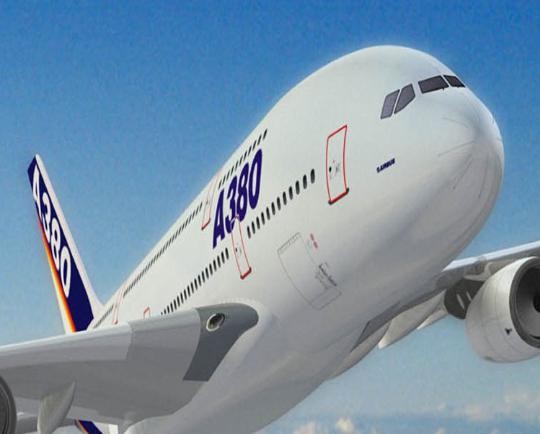
Airbus has selected RISE with SAP, paired with an end-to-end sovereign cloud deployment model, to modernize the business processes of more than 100,000 employees.
A decision that fits into a much broader trajectory: for more than a year, Airbus has been methodically building its European digital sovereignty strategy.
In early January 2026, the group issued a request for proposals to migrate part of its critical systems — ERP, MES (manufacturing execution systems), CRM, and especially PLM, the design documentation for its aircraft — to a European sovereign cloud.
Catherine Jestin, Airbus’s Vice President of Digital, outlined the issues to The Register. Some of the data processed by the aircraft maker is sensitive from both national and European perspectives, which necessitates choosing a sovereign cloud.
The other, more prosaic driver is that major software vendors, led by SAP, are concentrating their innovations on cloud platforms (S/4HANA at the forefront), leaving little room for customers who want to keep access to the latest features.
A Much Broader Strategy
This SAP contract fits into a stack of initiatives Airbus has been pursuing since late 2025 to influence the European digital sovereignty agenda.
In November 2025, the aircraft manufacturer became a founding member of ESTIA (European Sovereign Tech Industry Alliance), a pan-European consortium of companies advocating for an ambitious digital industrial policy, with a focus on investment and rapid scaling of European cloud solutions and digital services.
In May 2026, Airbus took a further step by partnering with six other European technology and industrial champions (ASML, Ericsson, Mistral, Nokia, SAP and Siemens) to form the “European Tech Creators.” A coalition that unites a heavyweight in aerospace, a semiconductor giant, a French champion of generative AI, and one of the world’s largest enterprise software publishers. A signal of the sector’s intent to collectively influence Europe’s digital infrastructure choices.
In parallel, Airbus is strengthening its own sovereign cybersecurity capabilities, notably through the acquisitions of Ultra Cyber Ltd and Quarkslab (following Infodas in 2024).
The group is also running a separate tender to evaluate “Trusted Cloud” infrastructure solutions, aimed at total immunity from extraterritorial regulations for its most sensitive data. A project separate from the SAP contract, but arising from the same logic.
What the Contract Must Deliver
Technically, RISE with SAP must provide Airbus with a standardized backbone built on the principles of simplification, harmonization, and a “Clean Core” — an approach aimed at limiting bespoke developments to facilitate updates and the adoption of new features. The deployment will cover core processes in production, supply chain, finance, and customer services.
The stated objective is also to prepare the ground for what comes next: SAP Business AI, AI agents, and intelligent automation, presented as the next building blocks to be activated once the technical foundation is modernized.
