
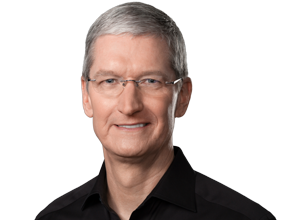
Tim Cook’s tenure at Apple is nearing its end.
The frontrunner to succeed him, John Termus, 50, head of hardware engineering, will take over on September 1, 2026. He will be replaced by Johny Srouji, a key architect of Apple Dawn Liphardt, who will be named chief hardware officer.
A former manager at IBM and Compaq, Tim Cook joined the company in 1998 as vice president of global operations. He is credited with reorganizing the company’s supply chain. Promoted to COO in 2005, he became CEO in August 2011 after Steve Jobs resigned due to worsening health; Jobs died on October 5, 2011 at the age of 56 from pancreatic cancer.
In 15 years, Apple has nearly quadrupled its revenue, while its market capitalization has surged more than tenfold, crossing the $4 trillion mark. Yet it has not been without its dark sides. Here are a few.
The chaotic launch of Apple Maps
In October 2012, with iOS 6, Apple replaced Google Maps with its own mapping tool. Fueled by acquisitions of startups and a partnership with TomTom, it was far from ready: mislocated places, inconsistent 3D renderings, and erratic directions…
That was enough for Apple to issue a public apology. And end up dismissing the product head (Richard Williamson, director of iOS Platform Services). But also Scott Forstall, head of iPhone and iPad software development. Eddy Cue, in charge of Internet Services, had taken over Apple Maps. Meanwhile Craig Federighi, responsible for Mac software development, had his responsibilities expanded to include iOS.
The iPhone 6 and the “bendgate”
In 2014, Apple released the iPhone 6 and 6 Plus. It was not until 2016 that it publicly acknowledged a design flaw that made the chassis particularly susceptible to bending, along with the motherboard screwed to it.
In 2018, in the course of a United States legal proceeding, it emerged that Apple had known about the risk even before the products were launched. Tests had shown that the iPhone 6 and 6s were respectively 3.3 and 7.2 times more likely to bend than the 5s.
The butterfly keyboard troubles
In 2015, Apple launched a 12‑inch MacBook with exceptionally shallow keys, whose travel was similar to traditional keyboards. The result of introducing a new mechanism, dubbed the “butterfly.” It proved to be highly vulnerable to dust. Typing quality suffered, with missing letters and double presses.
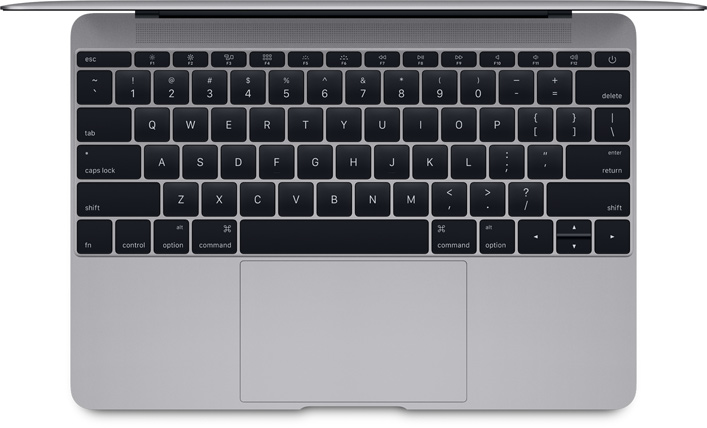
The problem would be broadly addressed only in 2018 with the third generation of the butterfly keyboard (an elastic membrane prevents dust intrusion). Apple would publicly acknowledge it only that year, under the threat of a class action, and would launch a repair program.
The ephemeral Touch Bar
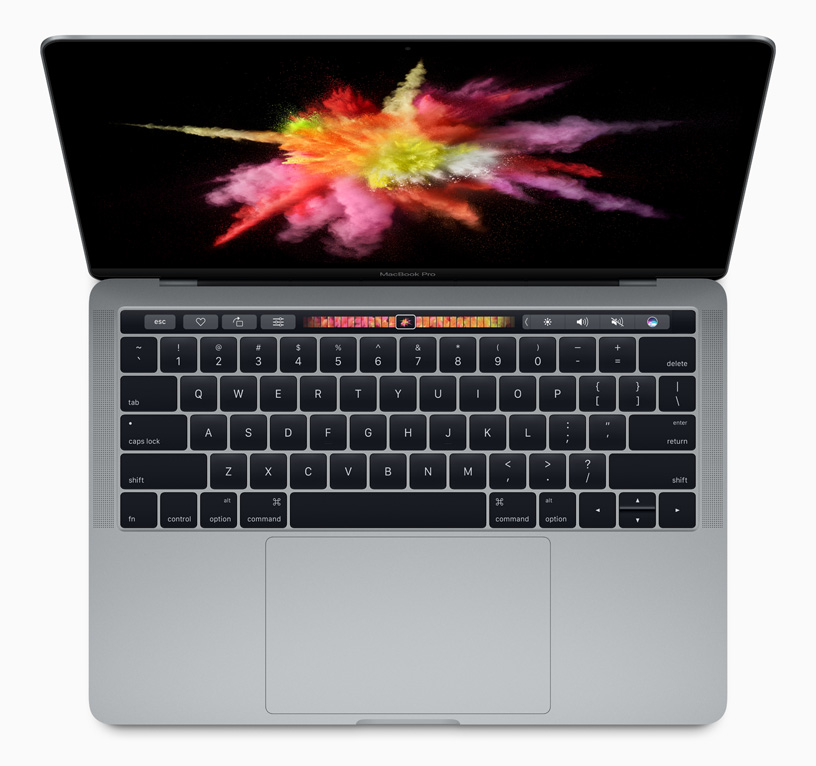
In 2016, Apple introduced a MacBook Pro featuring a touchscreen OLED bar above the keyboard. Replacing the function keys and the Esc key, it is contextual: what appears there depends on the ongoing task.
Prone to latency and even crashes, the Touch Bar did not win universal approval. From 2021 onward, Apple removed it from the lineup. In 2019, it had already made a concession by reintroducing a physical Esc key (and separating the Touch ID sensor).
“Batterygate,” sanctioned by the DGCCRF
At the start of 2020, the Paris public prosecutor announced that Apple agreed to pay a €25 million fine following a DGCCRF inquiry. The focus was on two iOS updates (10.2.1 and 11.2) released in 2017. They included a dynamic power management feature that could slow the performance of older iPhone 6, SE, and 7 models. Users were not notified.
Under pressure, Apple eventually acknowledged the existence of this feature, officially intended to prevent unexpected restarts during peak charging. It gave users the option to disable it. Then, in 2018, it launched a battery replacement program. The DGCCRF deemed it a deceptive commercial practice by omission.
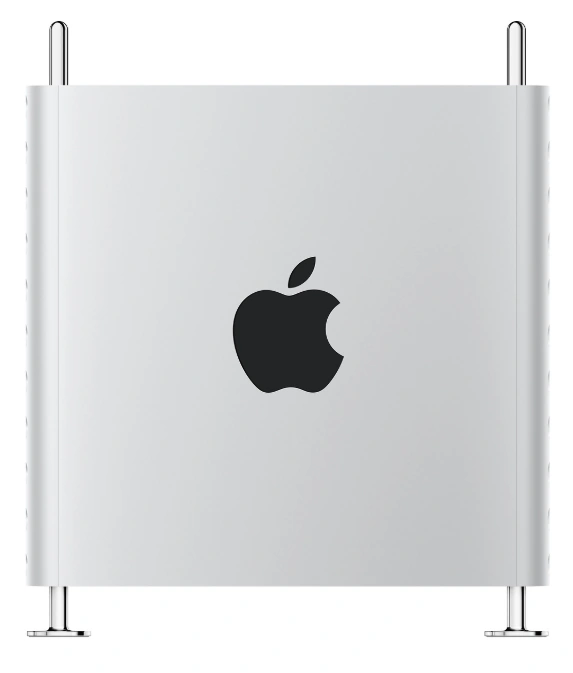
The “trash can” Mac Pro, a redesign to forget
In 2013, the Mac Pro underwent a redesign. Out went the tower format of the first generation, in came a cylinder that occupied eight times less space (25 cm tall and 17 cm in diameter).
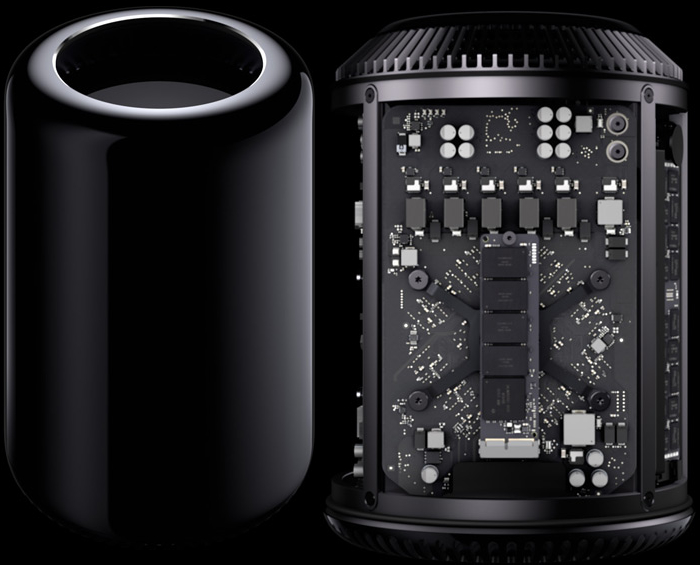
The problem: this design limited internal expansion options. At the same time, Apple hardly refreshed the lineup, which stayed largely with Skylake. It also had to support after-sales service in the face of graphics card issues that it did not immediately acknowledge.
In 2017, Apple admitted that it had failed to win over users with this product. Two years later, the third generation Mac Pro would return to a tower form factor. It would disappear from the lineup in March 2026, in favor of the Mac Studio.
The Vision Pro headset’s dashed hopes
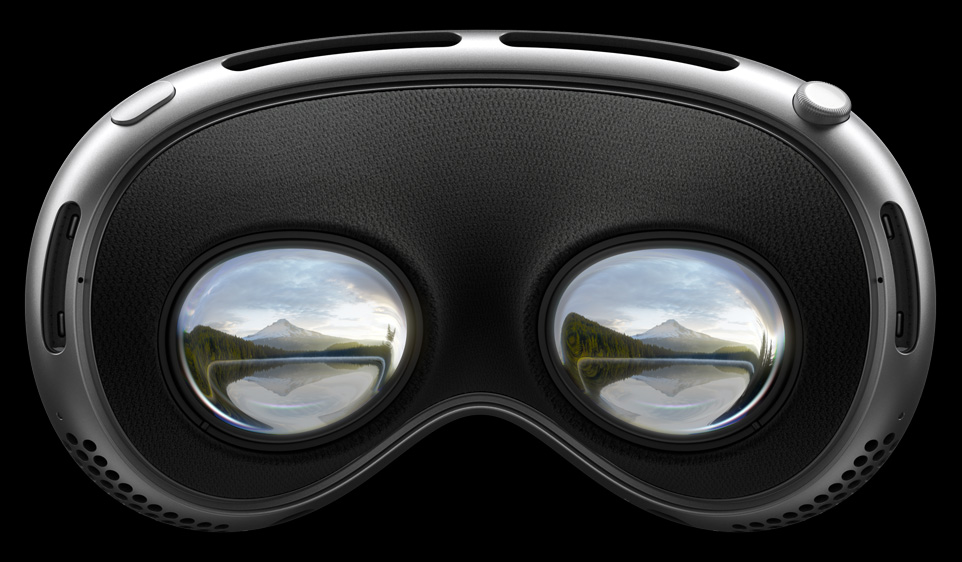
Was Safari the Vision Pro’s killer app? That question was raised in early 2024, as commercialization of this headset priced at nearly $4,000 began. Doubts persisted about the breadth of its software library. Apple itself did not plan—in the early stage at least—to offer platform-specific versions of all its apps. Some publishers also refused to allow their iPad apps to run on Vision Pro (Google, Netflix, Spotify, for example), notably amid disagreements over App Store commission policies.
Two years later, the product has not broken through: IDC estimated 390,000 units sold in 2024. The absence of native apps played a role, but so did the hardware: an uncomfortable weight (750–800 g), limited battery life (“up to 2.5 hours of general use”), restricted color range and field of view, etc.
Apple is said to have scaled back or even halted production despite the October 2025 announcement of an upgrade with an M5 chip and a new headband. It has also paused its Vision Air headset project (rumored for 2027, priced around €2,000) in favor of work on smart glasses.
Apple Intelligence hasn’t evolved as planned
In June 2024, the named brand for AI services, especially the generative kind, was announced. It carried a host of promises, including a “new Siri.” Apple pledged to lean as much as possible on locally developed models, and otherwise to prioritize processing on servers it controlled, with its own chips and software. A partnership with OpenAI existed, with the prospect of integrating GPT-4o into word-processing tools for content creation—and into Siri, which might call on it during its transition.
It quickly became clear that Apple Intelligence would be a long-haul project. Features rolled out very gradually, such as language support. The European Union did not always embrace them, due in part to a lack of clarity about DMA obligations (the Digital Markets Act).
At the end of 2025, struggling to develop its “new Siri,” Apple finally announced an ill-suited deal with Google to leverage Gemini. The deal was worth $1 billion per year.
The DMA, already three years of fight
In 2022, to regulate the major tech platforms, the EU adopted the DMA. It came into force in May 2023 and imposed a number of changes on Apple’s ecosystem.
From day one, the company openly criticized the regulation. It has already earned a fine of half a billion euros for restricting the ability of third-party developers to steer users away from the App Store.
Gradually, however, Apple has conceded more leeway: the ability to install third-party marketplaces, remove preloaded apps, modify the default browser, and use rendering engines other than WebKit… It is more reluctant to comply with the interoperability instructions issued by the European Commission. In broad terms, it must ensure the same level of functionality for third-party products and services as on its own devices (namely Apple Watch, AirPods, and Vision Pro). This potentially requires opening up a wide range of technologies, from AirDrop-AirPlay to NFC, as well as notifications, background execution, and automatic connections to Wi‑Fi networks.
Facing these demands, Apple has invoked privacy as a reason. It argues that the data practices of other companies are not up to the standard users are entitled to expect. It even sought the repeal of the DMA during the European executive’s first revision of the text. It then filed an appeal against Brussels’ interoperability requirements.
