
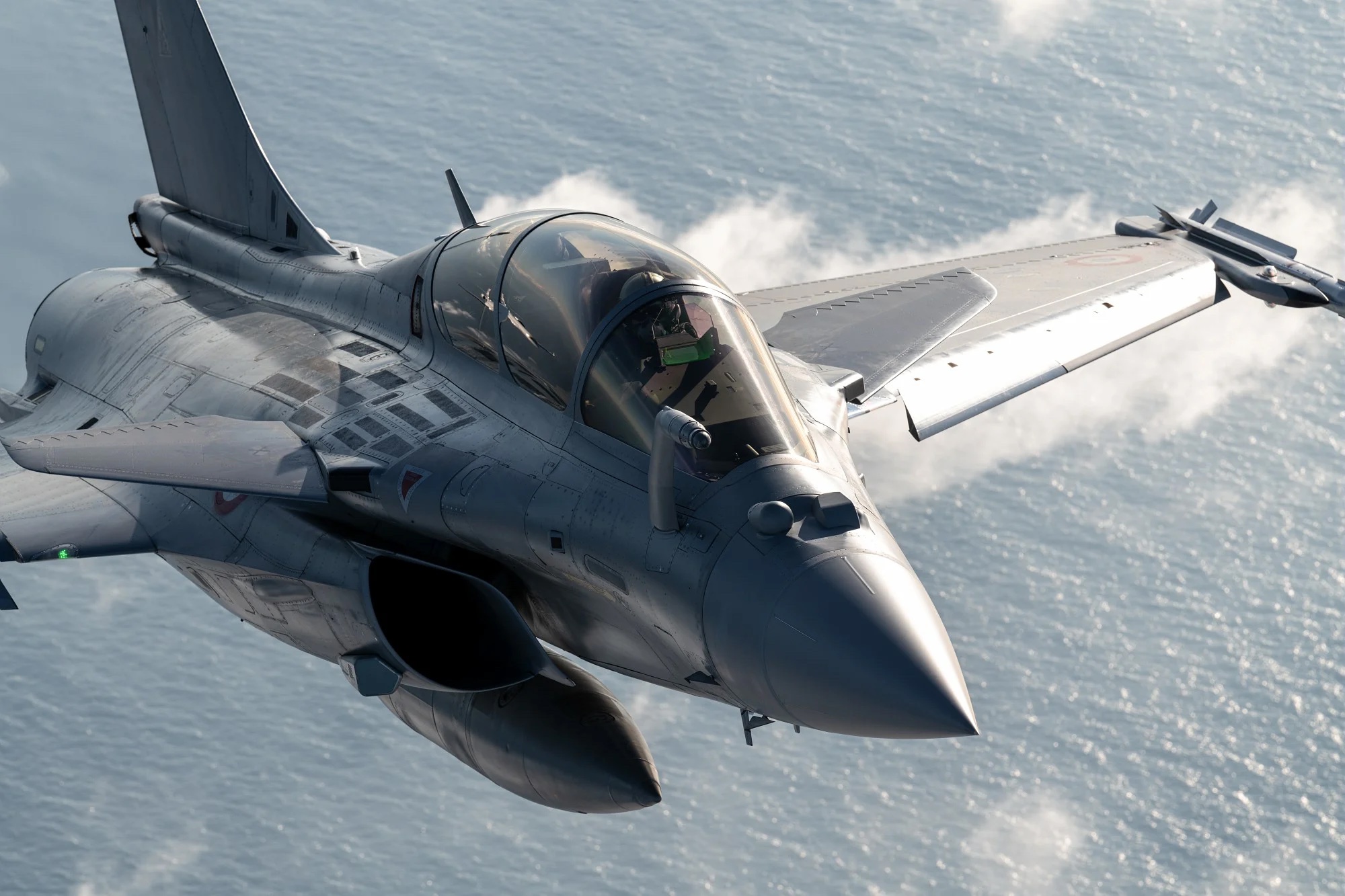
Dassault Aviation has conducted flight tests of two new onboard artificial intelligence algorithms embedded in the Rafale. The first was developed by the aircraft manufacturer’s own engineering teams, while the second was created in partnership with Thales’ cortAIx unit, with whom Dassault already collaborates on the combat aircraft.
According to the manufacturer, these software building blocks have now reached a maturity level sufficient to be considered for upcoming Rafale evolutions. Dassault, however, did not specify the exact nature of the functions tested or the operational role they would play in the cockpit.
AI Designed to Support the Crew
The French group situates this work within a broader approach to integrating a “controlled and supervised” artificial intelligence, designed to assist the crew rather than substitute for them.
Dassault highlights the specific difficulties of developing in the military domain. In particular, securing sufficient and reliable operational data—whether from actual flights or simulations—enabling dialogue between very different areas of expertise, and running these algorithms on an onboard platform whose computing resources are inherently limited.
The company asserts decades of experience as an industrial architect and integrator of complex systems, a know-how it presents as an asset to absorbing the constraints inherent to combat aviation.
European Industrial Realignment
These tests come at a pivotal moment for French combat aviation.
The discussions between France, Germany and Spain on the Future Air Combat System (SCAF), which linked Dassault with Airbus, stalled this year. Paris is now considering a potential solo continuation of its own next-generation aircraft program and more immediate Rafale upgrades.
Dassault has also indicated that it remains capable of continuing work on its own fighter while staying open to cooperation with new partners.
More broadly, the integration of AI into fighter aircraft is part of a dynamic observed across the sector worldwide. Defense contractors are looking to speed pilots’ decision-making and to prepare coordination with AI-piloted drones slated to fly alongside manned aircraft.
