

Long perceived as merely an outsourcing service, IT outsourcing has today become a genuine tool for strategic governance.
It now combines cost optimization, service quality and time savings with a performance-, compliance- and sustainability-oriented approach.
This evolution gives rise to an “inf outsourcing 3.0” grounded in automation, AI, smart backups and proactive management of IT infrastructures.
Choosing the best IT outsourcing company in Paris for SMEs and mid-size enterprises is therefore about more than picking a IT service provider: it is opting for a digital governance partner capable of guiding the transformation of the information system, from simple support to comprehensive, optimized management.
1. What is IT outsourcing?
IT outsourcing refers to the service by which a company entrusts to an external provider, called an IT outsourcer or infogérant, the management of its IT system.
It can involve all or part of the management of maintenance, security and monitoring of infrastructures.
This model of IT externalization enables organizations to delegate the technical operation of their digital environments to a specialized supplier.
The provider oversees the daily supervision of infrastructures, business applications and data.
Concretely, IT outsourcing involves outsourcing various IT services: preventive maintenance, IT asset management, data backups, cloud hosting, user support, or network protection.
These services are governed by an outsourcing contract (or a Service Level Agreement) that defines the scope, the service levels, the reversibility clauses and the performance indicators.
The client company can thus choose among several types of outsourcing:
- Partial outsourcing, limited to certain equipment, software or lines of business.
- Global outsourcing, covering the entire information system, from software updates to cybersecurity.
- Applications outsourcing, focused on the management of business applications and databases.
This model offers greater flexibility and cost control.
By outsourcing administration, updates and monitoring tasks, the company benefits from expert support and a more secure hosted infrastructure.
It can thus focus on its core business, while benefiting from a scalable managed solution tailored to its technical needs, its projects and its level of exigency.
IT outsourcing is therefore emerging as a strategic externalization, where trust, technical expertise and service quality are the true drivers of performance for the client company.
2. How does IT outsourcing work in practice?
The operating model of IT outsourcing rests on a set of well-defined business processes.
It all begins with the definition of the specification, a key document that details the scope, the technical needs, the expected service levels and the performance indicators.
This initial framing binds the IT outsourcer and the client company in a clear contractual relationship, where the ownership of the IT system is framed by security, confidentiality and traceability clauses.
Once the contract is in place, the outsourcer proceeds with the implementation of the managed infrastructure.
This includes IT maintenance, network supervision, system management and the securing of cloud computing or on-premise environments.
In hybrid environments, the outsourcer operates on both dedicated servers and hosted business applications, ensuring business continuity and regular software updates.
This mode of operation makes it possible to anticipate incidents, guarantee data availability and ensure compliance with ISO standards and regulatory requirements.
One of the main advantages of this model is the cost reduction and better management of operational risks.
By outsourcing system management and preventive maintenance, companies benefit from specialized support without needing heavy investments in hardware or a large internal team.
The provider relies on a scalable technical architecture and managed processes that guarantee a measurable service level: availability, response time and real-time performance monitoring.
IT outsourcing thus functions as a tailored managed solution designed to hand over the system’s management to an expert provider.
It adapts to the size, the stakes and the projects of each company, whether it is partial outsourcing, global outsourcing or applications outsourcing.
Its effectiveness is measured in terms of flexibility, time savings and service quality — benefits that make this model a central pillar of modern IT management.
3. The strategic advantages of IT outsourcing for the business
Entrusting all or part of its information system to an outsourcing provider is not just a technical delegation.
It is a strategic choice that enables the company to better control costs, strengthen security and gain in operational agility.
A managed solution dedicated to performance
One of the first benefits of IT outsourcing lies in cost reduction.
By externalizing operations and software updates, the company benefits from a turnkey managed solution, without the need to make heavy investments in hardware or in building up new internal teams.
This form of outsourcing optimizes the upgrading of tools and ongoing maintenance, while maintaining a high level of service thanks to the provider’s expertise.
Through standardized processes and advanced monitoring tools, every element of the system is tracked, measured and adjusted in real time.
A lever for security and compliance
In terms of IT security, outsourcing acts as an additional layer of protection.
Specialized providers implement strict backup, encryption and access-control processes.
They ensure that data remains hosted in countries compliant with European standards (GDPR, DSA), while guaranteeing confidentiality and traceability of operations.
Contractual clauses precisely define the rights and responsibilities of each party, thereby limiting the risks of loss or exposure of sensitive information.
In some cases, services also include shared hosting or an Application Service Provider model to simplify client relationship management.
Enhanced flexibility and tailored support
Beyond the technical aspects, IT outsourcing enables companies to respond quickly to evolving needs.
Depending on size and objectives, one can opt for partial outsourcing, limited to certain domains, or for a full solution that includes third-party applications maintenance and remote governance.
This model provides a clearer, holistic view of the system and customized support.
The provider acts as a consultant, a true strategic partner, able to recommend updates or modernization steps aligned with the market and internal requirements.
A contractual framework that builds trust
IT outsourcing rests on a clear contract, often paired with a Service Level Agreement (SLA).
This document defines control points, service levels, reversibility clauses and the terms of provider intervention.
By establishing such a framework, the client gains visibility and confidence, while enjoying ongoing support over the long term.
Even though some view it as creating dependency or reducing direct control, most companies find that this model fosters a durable client relationship rooted in performance, transparency and advisory capability.
4. From technical management to digital governance
Modern IT outsourcing no longer confines itself to technical monitoring or software maintenance: it has become a true lever of digital governance.
The goal is no longer merely to keep the IT estate operating but to influence the overall performance of the information system.
The specialized provider now plays a strategic advisory role, supporting the implementation of security policies, compliance measures and energy-efficiency optimization.
This evolution toward a managed model rests on a measurement-, traceability- and anticipation-based approach.
Thanks to advanced analytics tools and monitoring platforms, IT leadership gains a comprehensive view of their environments.
They can act proactively, adjust configurations, plan updates and identify competitive advantages tied to the performance of their infrastructure.
This approach fosters smoother collaboration between internal teams and external partners, each maintaining a precise role in the decision-making process.
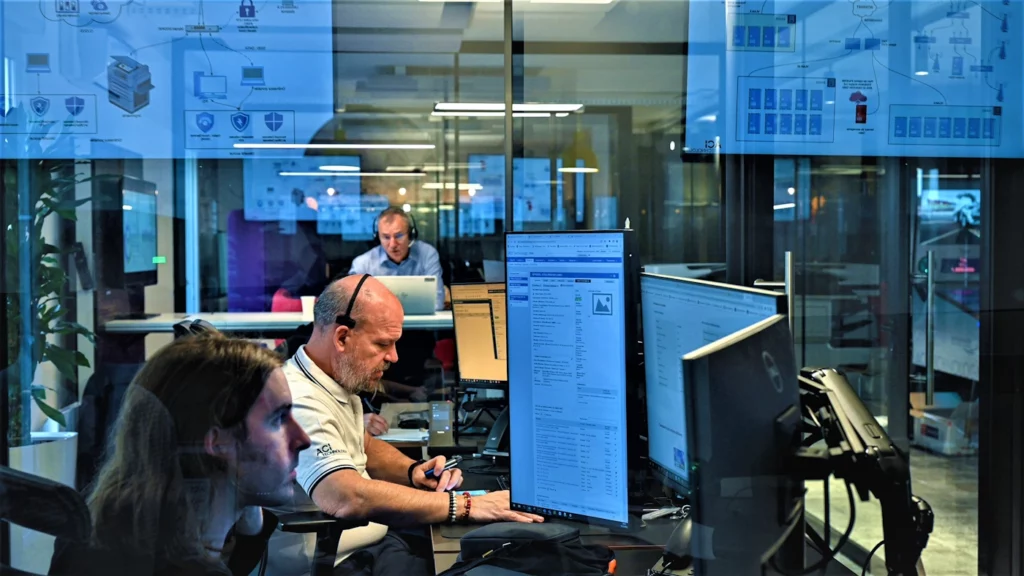
A concrete example of this transformation can be seen at ACI Technology, a managed IT outsourcing company that helps SMEs and mid-size firms modernize their managed environments.
The company does not stop at providing maintenance or hosting services: it offers strategic support focused on governance, compliance and energy efficiency.
Its model rests on a pragmatic implementation of best practices — security, monitoring, automation — that directly respond to performance and sovereignty requirements of information systems.
In this sense, outsourcing 3.0 moves closer to Business Process Outsourcing, where the provider manages not only the tools but also contributes to the optimization of business processes themselves.
This shift toward a hybrid model, at once technical and strategic, marks a key stage in the market’s evolution: a durable partnership, rooted in value creation and the adaptability of managed solutions.
Conclusion
IT outsourcing now stands as a major evolution in how we design and operate the information system.
By delegating supervision, maintenance and security to specialized teams, companies enjoy smoother management, stronger data protection and meaningful cost reductions.
Beyond operational gains, IT outsourcing reshapes the relationship between IT leadership and its partners.
It creates a managed, agile and transparent environment, where the provider does not just fix problems but acts as a true steering partner.
Adopted thoughtfully and integrated into the core of the digital strategy, IT outsourcing becomes a durable asset: a model capable of balancing performance, security and scalability while preparing the transition toward more responsible and sovereign architectures.
