To meet the standards of Project Zenith, devices will require at least 64 GB of unified memory.
Under this banner, Microsoft intends to offer preconfigured PCs for developers. The first ones will feature AMD Ryzen AI Halo chips.
The initiative follows the announcements made at the Build conference. On that occasion, Microsoft emphasized Windows as a “trusted development platform.” It formalized the general availability of several tools that will be found in Project Zenith devices.
Coreutils is indeed part of it. It is a set of command-line utilities based on Rust reimplementations of GNU coreutils and findutils.
Windows Dev Skills is also part of it. It’s a pack of skills for WinUI application development with GitHub Copilot, Claude Code and Codex.
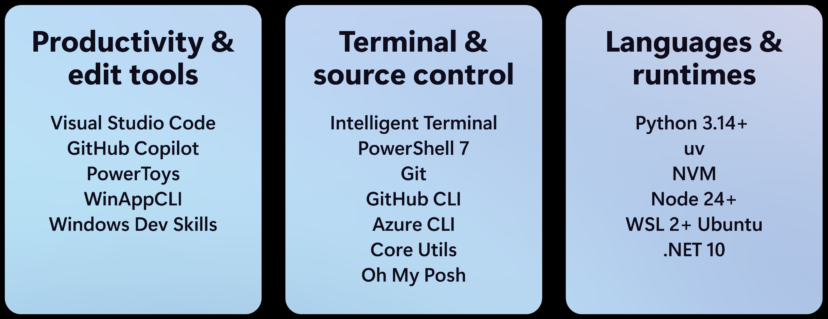
Windows Developer Configurations has also reached GA at Build 2026. The project currently includes various configurations that automate the setup of development environments. The main one is intended for WinGet. It installs PowerShell, Git, GitHub, VS Code, .NET, Python + uv, Node.js, Coreutils, Oh My Posh and PowerToys. It also applies Windows settings (dark theme, Git version control in File Explorer, showing hidden files…) and installs WSL 2 with Ubuntu.
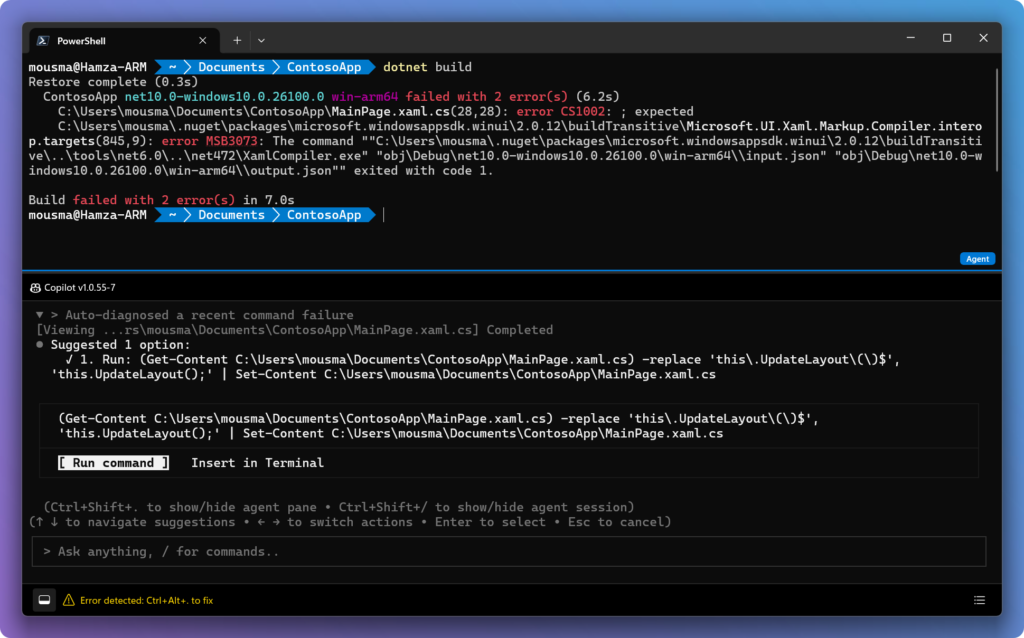
On Project Zenith devices, you’ll also find Intelligent Terminal — also announced at Build, but still in experimental release. It is a fork of Windows Terminal with native integration of CLI agents and awareness of the shell context.
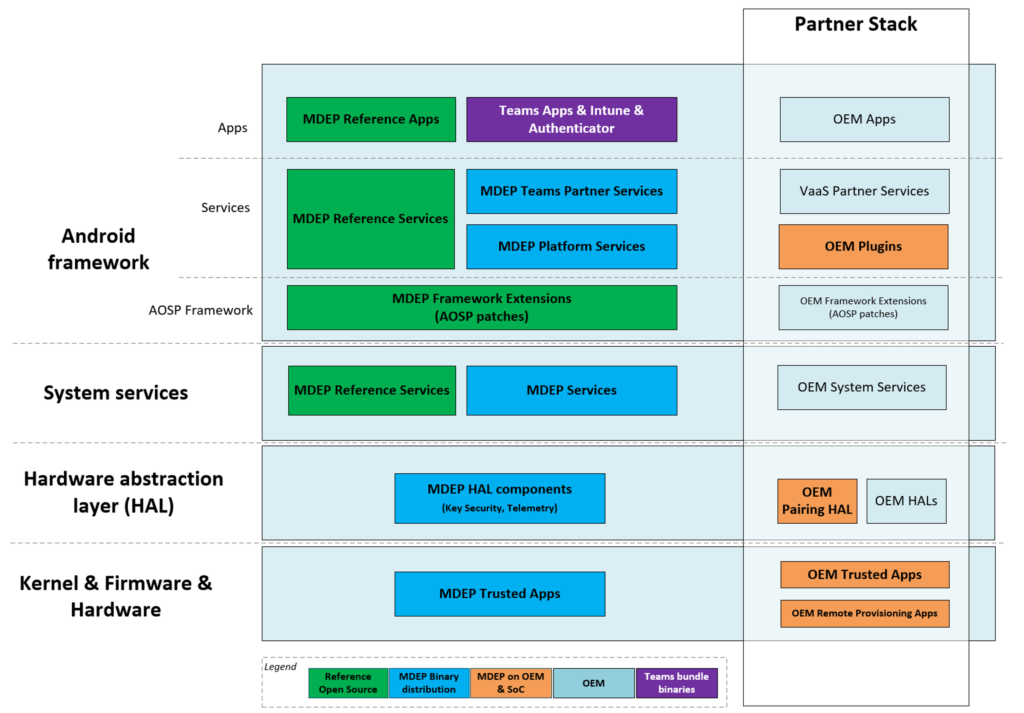
Project Solara: an Android-based foundation for an initiative around just-in-time UIs
Microsoft plans to preload the following tools:
It also highlights the security component, with agentic applications in its sights. This was also announced at Build. Among them is MXC (Microsoft Execution Containers). Still in preview, this isolation technology combines a TypeScript SDK and a JSON schema with a range of back-ends (ProcessContainer, LXC, Bubblewrap, MicroVM, Hyperlight, etc.).
The “local AI” angle — since there is one in Project Zenith — centers on the famous “token economy.” Microsoft did not issue a new announcement on this front. Remember that at Build, the emphasis was largely on extending Windows AI APIs to more chips (speech recognition on CPU and NPU, SLM on dGPU…). And they introduced the Aion models… behind which lies a lean Windows project whose Copilot would be the main interface.
Another project presented at Build, not developer-focused but AI-oriented: Solara. The promise: an ecosystem of devices tailored for agent-based applications. It is built around the concept of just-in-time UI: agents will adapt the interface to the device. There are currently two concepts, developed with MediaTek and Qualcomm. One resembles voice assistants like Amazon Echo and Google Home. The other takes the form of an electronic badge.
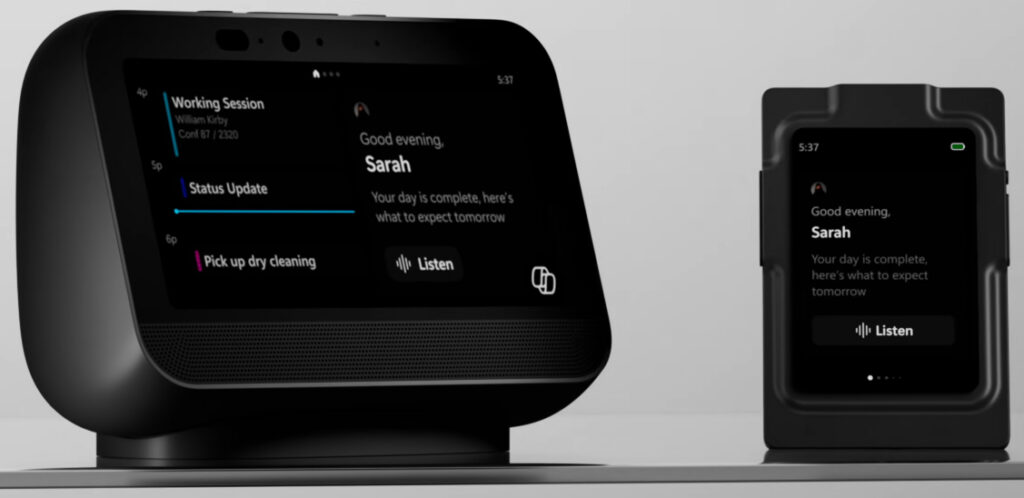
The substrate is named MDEP (Microsoft Device Ecosystem Platform). It is an operating system derived from AOSP (Android without Google services). Microsoft published the first version in 2024. It officially supports a dozen SoCs from MediaTek, NXP, Qualcomm and Rockchip.