
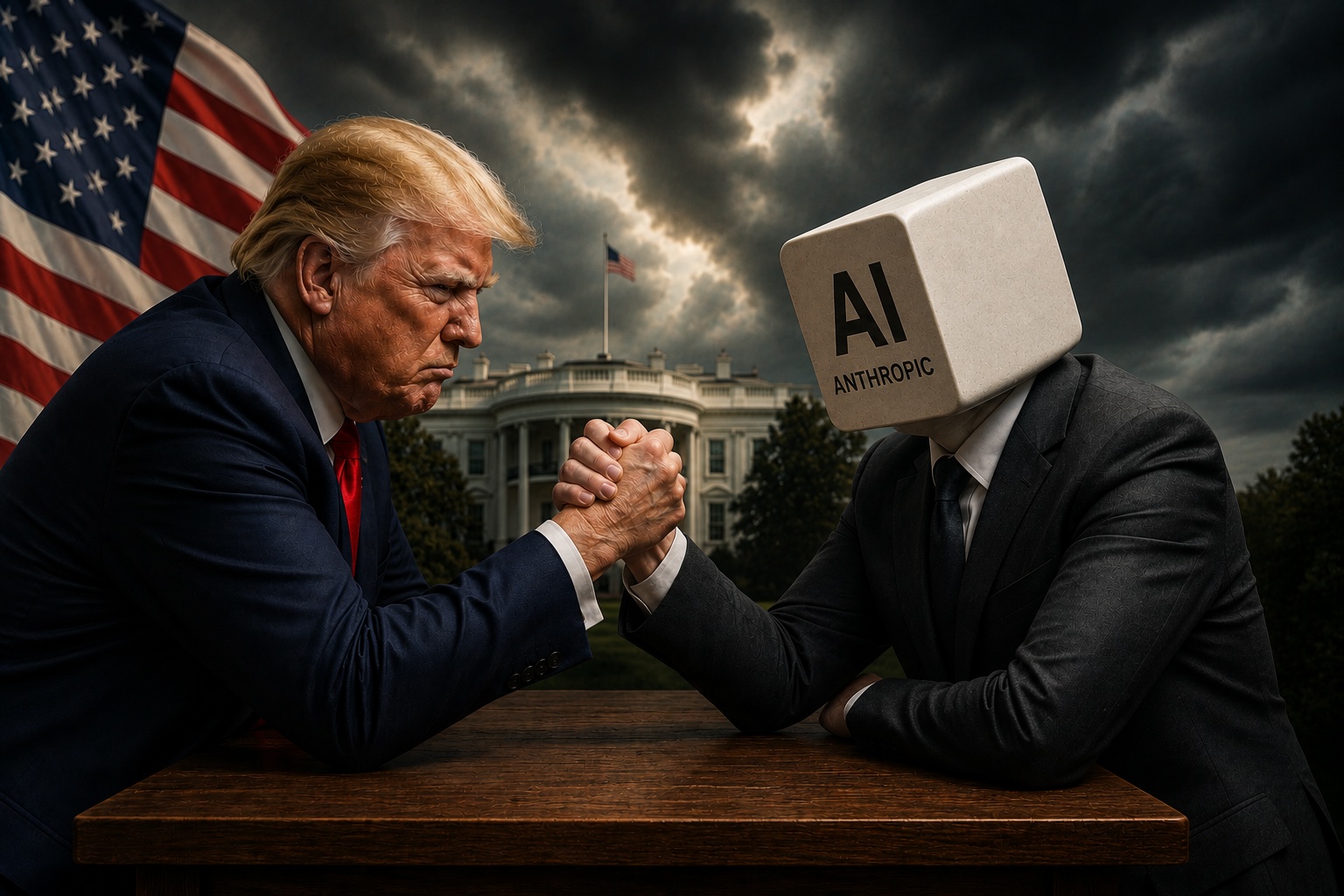
Everything started with a letter Anthropic received on Friday, June 12 at 5:21 p.m. Washington time.
The Commerce Department, represented by Secretary Howard Lutnick, orders the scale-up to suspend access to Fable 5 and Mythos 5 for every foreign national, whether on U.S. soil or abroad. Including Anthropic employees themselves born outside the United States.
The American government, invoking powers linked to national security, issues an export-control directive.
The problem: it is technically impossible to target only foreign users.
Anthropic says it had to disable access for absolutely everyone, everywhere, in order to comply with the order received. But it rejects the method chosen by the administration.
“We contest that the discovery of a potential security flaw, even a minor one, justifies the withdrawal of a commercial model deployed to hundreds of millions of people. If this standard were applied across the sector, we believe it would effectively block any new deployment of models for all providers of innovative models,” the scale-up protested.
Anthropic complies but challenges the decision
According to its account, the government provided only verbal evidence of a potential jailbreak, limited and not universal. Anthropic claims to have verified that the level of capability demonstrated is widely accessible through other competing models, including OpenAI’s GPT-5.5, and corresponds to everyday use by cybersecurity defense teams.
Diplomatically, Anthropic asserts that it shares the view that the government should be able to block deployments deemed dangerous, but only if this is framed within a transparent, fair, clear, and technically grounded legal framework. These are principles that, it says, this action does not respect.
“We think this is a misunderstanding and we are doing everything to restore access as quickly as possible,” it stated.
According to Axios, several of its top technical executives are currently in Washington, D.C. meeting with White House officials and seeking to resolve the dispute.
The European reaction did not wait. On Sunday, June 14, the European Commission announced that it was examining the practical consequences of this decision for European users of the service.
Spokesman Thomas Regnier emphasized that there should be clear boundaries on the diplomatic front, noting that these very powerful AI models offer real benefits, notably in cyber defense, while raising legitimate security questions. Still, the measures taken in this context should not be discriminatory toward partners.
Brussels seized the opportunity to press its case for the continent’s technological autonomy. For the Commission, this episode once again underscores Europe’s need to strengthen its technological sovereignty.
Bad timing for an IPO in the works
The affair comes at a pivotal moment for Anthropic, which has just filed for a U.S. initial public offering. Its ties with the Trump administration had already been strained since the start of the year amid disputes over the military use of its models for surveillance or autonomous weapons.
According to the Financial Times, the climate remains volatile. The scale-up is embroiled in a legal battle with the U.S. government over its Pentagon designation as a “risk to the supply chain.”
For investors tracking its IPO dossier, this new spasm of tension is a signal hard to ignore.
